19 Shocking Eiffel Tower Secrets You Didn't Know
The True Story Behind the Eiffel Tower
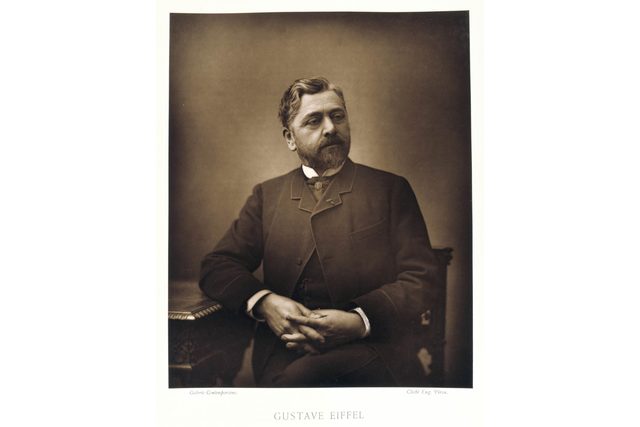
The Eiffel Tower, one of the most iconic landmarks in the world, has a rich and complex history that goes beyond its famous silhouette. While it is often associated with Gustave Eiffel, the tower was not actually designed by him. Instead, two of his senior engineers, Maurice Koechlin and Emile Nouguier, created the initial sketches in 1884. Eiffel initially dismissed their design as too plain, but once architect Stephen Sauvestre added the signature arches and glass pavilion, Eiffel became a strong advocate for the project and took credit for its development.
A Rejected Proposal in Barcelona
Before Paris embraced the idea, Barcelona had a different response. Eiffel originally proposed the tower to city officials in Barcelona, but the plan was turned down. Historical records suggest that the rejection may have been due to budget constraints or a lack of interest in such an unconventional structure. This setback eventually led to the tower being considered for the 1889 World’s Fair in Paris, where it would find its permanent home.
A Monumental Opportunity
Paris was looking for a 300-meter-tall archway to serve as the entrance to its 1889 World’s Fair, which marked the 100th anniversary of the French Revolution. Eiffel’s design was selected from over 100 submissions, and construction began on January 28, 1887. This opportunity proved to be a turning point for Eiffel and his team, as the tower would become one of the most recognizable structures in the world.
A Connection to the Statue of Liberty
Eiffel’s involvement in another iconic structure, the Statue of Liberty, helped solidify his reputation as a leading engineer. In 1879, he was brought in to replace the original engineer who had passed away. He designed the flexible metal skeleton that supports the statue, making it a key component of its stability. In this way, the Eiffel Tower and the Statue of Liberty share a unique architectural connection.
Initial Public Disapproval
Despite its eventual success, the Eiffel Tower faced significant opposition when it was first proposed. A group of 300 Parisian intellectuals signed a petition protesting the construction, calling it “useless and monstrous.” Even after completion, writer Guy de Maupassant famously avoided the area by eating lunch at a café directly beneath the tower, the only place in Paris where he could not see it.
A Record-Breaking Achievement
When the Eiffel Tower opened on March 15, 1889, it became the tallest structure in the world at 984 feet. It held this title for 41 years until the Chrysler Building surpassed it in 1930. However, the Eiffel Tower made a comeback in 1957 when a 67-foot antenna was added, making it 6 feet taller than the Chrysler Building. By then, the Empire State Building had already taken the title of the world’s tallest building.
A Tower That Grows
One of the more fascinating facts about the Eiffel Tower is that it can grow up to 6 inches taller on warm days due to thermal expansion. The structure also leans slightly away from the sun, demonstrating how engineering and physics work together to maintain its stability.
A Painted Legacy
The Eiffel Tower has undergone multiple repaints throughout its history. It has been painted 19 times, with each coat protecting the metal from oxidation. The tower has worn various colors, including red-brown, yellow-ochre, and chestnut brown. The amount of paint used is staggering—about 60 tons to cover the surface, along with 50 kilometers of cords and 5 acres of netting.
A Secret Apartment
Eiffel even built a secret apartment for himself on the third level of the tower, 1,000 feet above ground. The space included rustic wooden furniture, a grand piano, and advanced laboratory equipment. Today, visitors can tour the apartment and see life-size mannequins representing Eiffel and his guests.
A Lifesaver During War
The Eiffel Tower was not just a symbol of France; it played a crucial role during both World Wars. Initially intended to be a temporary structure, it was saved from demolition during World War I because of its usefulness in radiotelegraphy. During the Battle of Marne in 1914, the tower’s wireless telegraph transmitter was used to jam German communications, helping the Allies win the battle. It continued to serve as a communication hub throughout the war.
Defying Hitler
During World War II, when Germany occupied Paris, city officials cut the lift cables so that the Nazis would have to climb the 1,710 steps to the top if they wanted to hang a swastika. When the Germans attempted to do so, the flag was blown away by the wind. Later, when Hitler ordered General Dietrich von Choltitz to destroy the tower, he refused, ultimately saving it from destruction.
A Scam and a Marriage
The Eiffel Tower has also been involved in some unusual events. A con artist named Victor Lustig managed to sell the tower twice in the 1920s, convincing investors that it was being sold for scrap metal. In a more romantic twist, an American woman named Erika Labrie married the Eiffel Tower in 2007, changing her last name to Eiffel.
Legal Challenges
While the Eiffel Tower’s design is in the public domain, a 1989 French court ruled that its nighttime light show is protected by copyright. This means that professional use of photos taken at night requires permission from the tower’s operators. Although this rule is strict, casual photos on social media are generally safe.
Global Replicas
Despite these legal challenges, the Eiffel Tower has inspired numerous replicas around the world. From London to Las Vegas to Lahore, Pakistan, there are more than 30 replicas. One notable example is the half-scale model at the Paris Las Vegas hotel, which was originally planned to be full size but had to be reduced due to proximity to the airport.

Post a Comment for "19 Shocking Eiffel Tower Secrets You Didn't Know"
Post a Comment