The Boeing 707: The Plane That Changed Aviation Forever
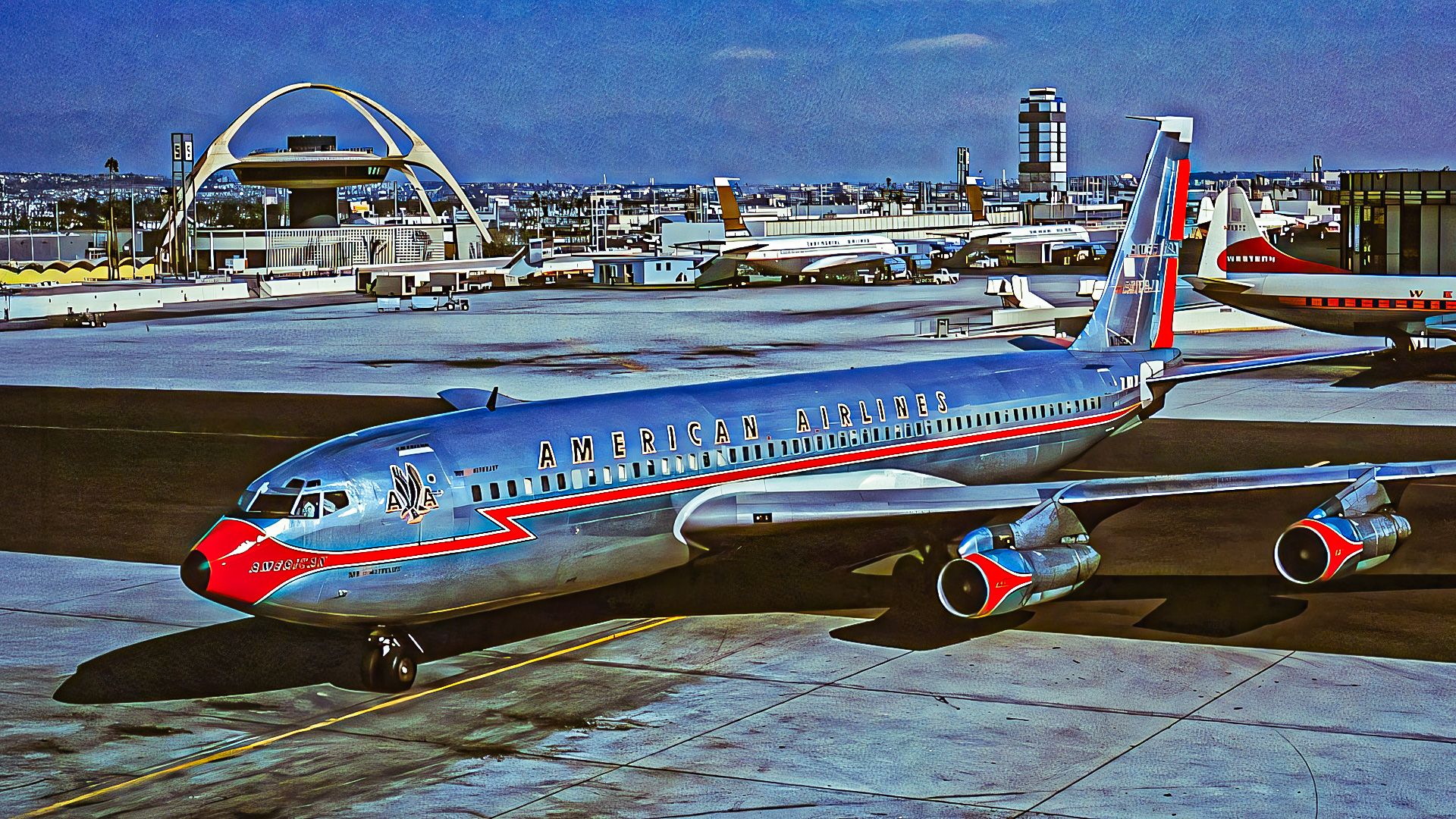
The Boeing 707: A Pioneering Aircraft That Transformed Air Travel
The Boeing 707 was the aircraft that pushed commercial aviation into an entirely new era. As Boeing's first jet airliner, it marked the beginning of the modern jet age and laid the foundation for the company’s long line of successful passenger aircraft that followed. Its entry into service reshaped the expectations of airlines and travelers and established Boeing as a leader in global aviation.
The 707 transformed air travel from the world of low-flying and propeller aircraft into one defined by speed, altitude, and smooth comfort. Passengers who were used to long, bumpy journeys suddenly found themselves cruising above the weather in a sleek and quiet jet. This shift changed not only how people experienced flights, but also how airlines designed their global networks, since the 707 made long-distance travel faster, more reliable, and accessible to a larger share of the public.
The impact of the 707 extended far beyond the passenger experience and helped redefine the scale of international travel itself. By enabling airlines to operate faster and more efficient long-haul flights, the aircraft opened global tourism and business travel to a much wider audience. Its success accelerated the transition to majority-jet fleets around the world and set the standard for the technological progress that followed throughout the second half of the twentieth century.
Airliners That Set The Stage For The 707
The Boeing 707 did not replace a single aircraft but instead marked the shift from the piston era to the jet age. Before its arrival, long-haul travel relied on Douglas airliners like the DC-6 and DC-7, which used four piston engines and typically carried about 50 to 80 passengers. These aircraft were reliable for their time, yet their speed and altitude limitations created an opening for a new generation of jet-powered designs.
Another important predecessor was Boeing’s own 377 Stratocruiser, a luxurious but costly aircraft that represented the peak of large piston airliner technology. It offered impressive comfort and range, although its maintenance needs and operational complexity made it increasingly impractical as jets approached.
Earlier designs like the Boeing 247 and the Lockheed Constellation series helped shape the expectations that the 707 would ultimately surpass. The 247 introduced the idea of a modern all-metal airliner, while the Constellations advanced long-distance comfort and range throughout the 1940s and 1950s. These aircraft laid important groundwork, but the arrival of the 707 marked a clear departure from everything that came before it.
The Airlines That Brought The 707 To The World
Pan American World Airways served as the launch customer for the Boeing 707 and was the first airline to commit to the jet age. The carrier placed its initial order in October 1955 and introduced the aircraft into commercial service on October 26, 1958, with a flight from New York to Paris carrying 111 passengers and 11 crew members. Pan Am went on to operate a large and influential 707 fleet before retiring the type in 1981.
In the United States, Pan Am, TWA, and American Airlines each built fleets of more than one hundred 707s. These carriers used the jet to modernize their networks and expand international service at a pace not possible with earlier piston aircraft. Other operators such as Continental, Braniff, and Northwest also adopted the 707, although on a smaller scale.
Across the Atlantic, BOAC and Air France emerged as the two largest European operators of the 707 and played major roles in bringing jet travel to the region. The aircraft also found strong demand in Asia, where Pakistan International Airlines, Air India, El Al, and Iran Air utilized the type to expand their long-range routes. Together, these carriers helped make the 707 a truly global presence in its early years.
As the 707 spread across airline fleets worldwide, it quickly became a symbol of modern air travel during the 1960s and 1970s. Its presence allowed carriers on every continent to introduce faster service, open new city pairs, and compete on an international scale in ways that had not been possible before. By the time production ended, the aircraft had helped create a far more connected air transport system and cemented its status as one of the most influential commercial jets ever flown.
A Look At The Different 707 Variants
The Boeing 707 family included several distinct variants, each designed for different performance needs and airline requirements. The first version to enter production was the 707-120, which introduced the world to Boeing’s new jetliner and typically seated up to 189 passengers in a high-density layout. This variant formed the foundation for the larger, longer-range models that followed.
The 707-320 was the intercontinental version of the aircraft and served as a major step forward in capability. It featured a stretched fuselage compared to the -120 and incorporated longer wings that allowed for greater fuel storage. This additional range enabled airlines to operate true long-haul routes with consistent reliability.
The most successful variant was the 707-320C, which combined passenger service with convertible cargo capability, resulting in 337 aircraft produced. Boeing also offered the 707-420, a model nearly identical to the -320 but equipped with Rolls-Royce Conway engines. This engine choice made the -420 especially popular with several European and international carriers.
Safety Record and Major Incidents
The Boeing 707 recorded 174 hull loss accidents and 89 additional incidents across its global service history. These events resulted in a total of 3,039 fatalities, which include passengers, crew, and, in some cases, people on the ground. While the 707 helped usher in the jet age, its accident record reflects both the learning curve of early jet operations and the wide range of environments in which the aircraft flew.
The first crash involving a 707 occurred on August 15, 1959, during an American Airlines training flight. The aircraft, a 707-123, was performing simulated takeoff maneuvers near Calverton, New York. Loss of control during the exercise led to an impact that killed all five crew members aboard.
One of the deadliest accidents involving the 707 took place on August 3, 1975, when a chartered Royal Air Maroc flight crashed into a mountain while descending to Agadir. The aircraft was operating a service from Paris and struck terrain during its approach to Inezgane Airport. All 188 passengers and crew members died, making it one of the worst tragedies in the history of the type.
The 707’s Ongoing Military Role
The backbone of the United States Air Force tanker fleet remains the KC-135 Stratotanker, a military derivative of the Boeing 707. The USAF still operates 376 KC-135s in active service, underscoring how durable and adaptable the design has proven to be. Even with newer tankers entering the fleet, the KC-135 continues to support global operations daily.
Another major 707-based platform still in frontline service is the RC-135V and RC-135W Rivet Joint. These aircraft are used for intelligence collection and provide real-time strategic and tactical information to military commanders. Their advanced sensor suites and long endurance have made them essential assets in U.S. and allied surveillance missions.
The E-3G Sentry is another important example of the 707’s continued military relevance. This airborne warning and control system aircraft carries a large rotating radar and provides airspace monitoring and battle management support. It remains one of the most recognizable military adaptations of the 707 and continues to play a critical role in modern air operations.
The Boeing 707 design also served as the basis for several generations of the United States presidential aircraft. Early versions of Air Force One were built on the VC-137 platform, a modified 707 that carried Presidents Kennedy, Johnson, Nixon, and Reagan on diplomatic missions around the world.
The 707’s Lasting Impact On Modern Travel
The Boeing 707 brought a level of passenger comfort that earlier propeller aircraft could not match. Travelers suddenly enjoyed smoother rides at higher altitudes, quieter cabins, and a more modern onboard environment. This shift raised expectations across the entire industry and helped shape the baseline for what passengers consider standard today.
The 707 also transformed global travel through its long-range capability. Airlines could connect cities that had previously required multiple stops, which shortened journey times and made international travel far more practical for both business and leisure. These new routes paved the way for the highly connected global network that exists today.
Perhaps its most lasting influence was establishing Boeing as a leading force in commercial aviation. The success of the 707 proved that Boeing could design, produce, and support large passenger jets on a global scale. This foundation enabled the company to create later icons like the 727, 737, 747, and 777, shaping the direction of commercial aviation for generations.

Post a Comment for "The Boeing 707: The Plane That Changed Aviation Forever"
Post a Comment