Fly Bristell B23 Energic
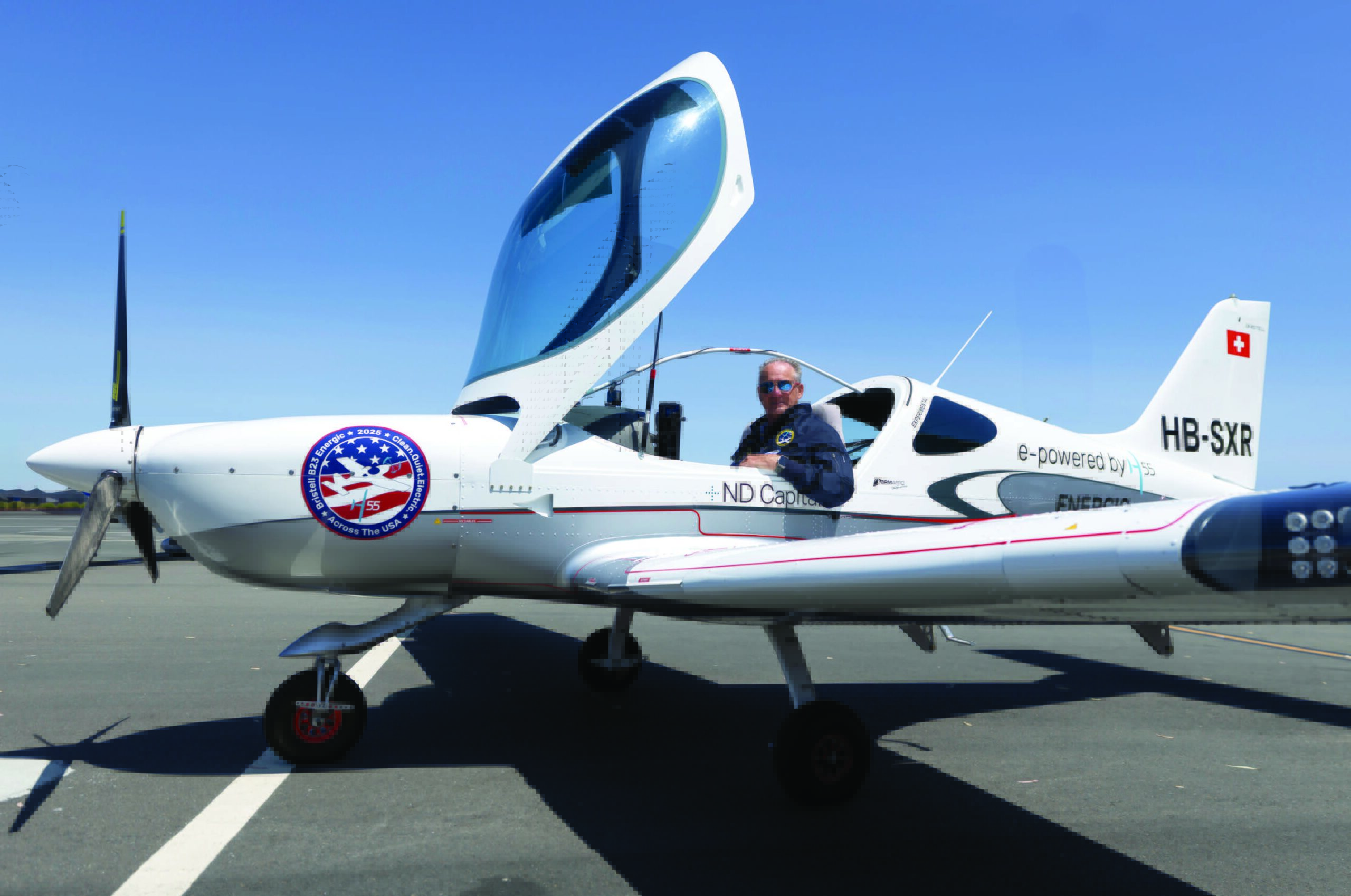
A Glimpse into the Future of Aviation
In 2011, I had a glimpse of the future when I witnessed an electric airplane take flight at EAA AirVenture in Oshkosh, Wisconsin. Fourteen years later, I finally had the opportunity to fly an electric airplane for the first time. The aircraft was the Bristell B23 Energic, which is currently touring the United States offering demonstration flights.
The airplane that made its debut at AirVenture was a twin-engine, experimental Lazair ultralight designed by Dale Kramer. He replaced the gas engines with electric motors and loaded the wings with around a hundred lithium polymer (LiPo) batteries. These were the same batteries used to power remote-control airplanes, with a total capacity of 7.2 kW and a weight of 100 pounds. The cost of these batteries was $3,300. In one of the early flights, Kramer took off from a lake, flew about 30 feet above the water, and managed to stay airborne for 50 minutes. His airspeed was measured at 37 mph. Fourteen years later, an hour is still the target time that most electric plane manufacturers are striving for in a trainer aircraft.
The Bristell B23 Energic: A New Era in Electric Aviation
Enter the Bristell B23 Energic, a result of a partnership between Czech airplane manufacturer BRM Aero and Swiss electric propulsion company H55. BRM Aero, founded in 2009, produces seven light sport and ultralight aircraft, including the B23 and B23 Energic, and now ships over a hundred aircraft per year. The B23 Energic is based on BRM Aero's piston-powered B23, a two-seat, all-metal, low-wing design available with either the 100 hp 912iS Rotax engine or the 141 hp 915iS turbocharged version. Fuel capacity is 120 liters (31.7 gallons).
The piston-powered B23 has an empty weight of 450 kilograms (992 pounds), a maximum takeoff weight (MTOW) of 750 kg (1,653 pounds), and a useful load of 300 kg (661 pounds). It has two wing lockers that can each hold up to 20 kg (44 pounds) of luggage, and a fuselage luggage compartment that can carry 15 kg (33 pounds).
Specifications for the 100 hp 912iS version include a "maximum horizontal flight speed" or VH at FL 120, which I take to be the cruise speed, of 107 ktas. Its never exceed speed VNE is 156 kcas. VS0, the stall speed with flaps extended, is 43 kcas. The best rate of climb with flaps retracted is 702 fpm.
Electrifying the B23: H55’s Role in the Future of Aviation
The B23 Energic uses the B23's airframe but replaces its engine with H55's electric motor and batteries. H55 is a leader in electric propulsion systems for aviation. It was founded by former Solar Impulse team members. The Solar Impulse 2 was a solar-powered aircraft that flew around the world in 2015-16. It boasted a wingspan wider than a Boeing 747, and it was covered with over 17,000 solar cells that charged its batteries in the daytime, allowing it to fly through the night.
H55 has several strategic partnerships to install its components and batteries in other aircraft. For example, the company is working with Pratt & Whitney Canada to develop the energy storage system for a hybrid-electric, 49-seat de Havilland Canada DHC-8 Q400 demonstrator. It's also working with CAE, a flight simulator provider with a network of flight schools, to convert its fleet of 80 Piper Archer aircraft to electric power. For that project, H55 will provide a larger version of the battery pack used in the B23 Energic. Safran, a French multinational aerospace and defense company, will supply the electric motor.
That work is being done as a supplemental type certificate (STC) that will be held by CAE. Long term, that provides a potential path for Piper to offer an electric version of the Archer and for Archer owners to convert their planes to electric power.
The B23 Energic: Design and Performance
When I first saw the B23 Energic, it reminded me of the now discontinued PiperSport. That was Piper's rebranded version of the Czech-built CZAW SportCruiser, which I test-flew at the Piper factory in 2010. It's my favorite light sport aircraft (LSA) that I've flown to date because of its excellent visibility through the front-hinged bubble canopy and well-balanced center stick that made it easy to fly. Later I learned that the B23 and the CZAW SportCruiser were both designed by Milan Bristela, who is the founder and CEO of BRM Aero.
The B23 Energic replaces the B23's engine and fuel tanks with the H55's modular electric propulsion system (EPS). Power is provided from a 600-volt, 48-kWh, lithium-ion battery pack that's built into the wings. To put that into perspective, the average U.S. household uses approximately 29-30 KWh per day.
The current battery consists of 86 modules, each of which contains 36 4.2-volt cells. The plan for the production version is to move to 120 cell modules to reduce cost and increase power density. Total weight of the batteries is about 300 kg (660 pounds). The battery is guaranteed to last for at least 1,500 charge cycles.
Regulatory Considerations and Operational Limitations
The maximum takeoff weight of the piston-powered Bristell 23 is 750 kg, but the current test prototype of the electric version has a maximum takeoff weight that's 100 kg higher at 850 kg, which is 1,874 pounds. The team is seeking a 50 kg increase in gross weight for the final production version, bringing it to 900 kg, or 1,984 pounds. If the company gets the max gross weight increase, it doesn't plan to increase the payload, as all of that weight gain will be used for more batteries.
The aircraft's endurance is specified at 60 minutes, plus 10 minutes of energy reserve. That just reaches the industry's target for a practical flight trainer, though it relies on a difference between European Union Aviation Safety Agency (EASA) and FAA rules for fuel reserve, or in this case, energy reserve.
The B23 Energic Experience
The B23 Energic will ship with a three-blade, fixed-pitch, carbon-composite propeller made by DUC Hélices. The pitch is adjustable on the ground by loosening some nuts and twisting each prop blade to a new pitch angle. However, the airplane won't have the wing lockers or the optional BRS parachute found in the piston-powered version. Both were eliminated to increase the weight available for batteries.
One nice feature of the airplane is its generous cabin width of 51.2 inches. I'm just over 6-foot tall, and the cabin felt roomy, not at all like the Cessna 150 that I learned to fly in many years ago. The wingspan is 30.4 feet and length is 21.6 feet, so the aircraft will easily fit into a standard T-hangar.
Advantages of Electric Aircraft
Electric planes do have the advantage over pistons when operating at high density altitude. Normally aspirated engines lose power in high, hot, and humid conditions. However, electric motors still produce the same power regardless of atmospheric conditions. So electric training aircraft should be relatively more attractive to flight schools that operate in high or hot locations.
The big advantage of electric aircraft is their low, hourly operating cost. Depending upon the local cost of electricity, B23 Energic operators could expect to pay about $8-$9 to operate the aircraft for an hour. The cost of fuel and oil for a typical trainer aircraft probably costs at least $50 per hour, so that's a big difference.
Flight Experience and Final Thoughts
My demo pilot was Laurent Wülser, who grew up in Switzerland and has been the president of the Aéroclub de Genève for the past 18 years. Wülser let me do all of the flying around Palo Alto Airport (KPAO) in California, and I sat in the right seat which, as a CFI, is where I spend most of my time.
He talked me through the electrical switches, which included separate ones for the batteries in each wing and for the cooling and backup cooling systems. The electric motor is liquid cooled, and the battery modules are air cooled.
The panel in our review aircraft, which had the Swiss call sign HB-SXD, included two Garmin G5s, which act as small PFDs, displaying the flight instruments. The only large glass displays were the motor management computer (MMC) and power management computer (PMC). The latter display displayed a placard that read: "Single battery operations limited to 150 amps." As an electrical engineer, I can assure you, that's a lot of juice. Later Laurent showed me that the PMC displays the voltage and current for the left and right batteries, and the total energy left in the battery, which was 43 kWh for our flight.
After landing, I realized that once we took off, I totally forgot that we were flying an electric aircraft. And that's probably the best testimonial for electric propulsion: It should be an enabling technology and not get in your way. Electric aircraft are now poised to start contributing to general aviation, and I can't wait to fly another one.
Spec Sheet: B23 Energic
- Price (fully equipped, as tested): $431,000 for early buyers
- Engine: 104 kW electric motor/90 kW MTOP
- Horsepower equivalent: 140 hp/121 hp MTOP
- Battery: 48 kWh of usable energy
- TBO (or equivalent): 1,500 battery cycles
- Propeller: 3-blade, fixed pitch, carbon composite
- Seats: 2
- Wingspan: 9.27 m (30.4 ft.)
- Length: 6.58 m (21.6 ft.)
- Height: 2.36 m (7.74 ft.)
- Cabin width: 130 cm (51.2 in.)
- Basic Empty Weight: 670/720 kg (1,477/1,587 lbs.)
- Max Takeoff Weight: 850/900 kg (1,874/1,984 lbs.)
- Basic Useful Load: 180 kg (397 lbs.)
- Max Rate of Climb: 800 fpm at MTOP
- Stall Speed (flaps extended): estimated 45-50 kias
- Max Cruise Speed: 200 km/h (108 knots)
- Max Endurance: 60 minutes plus 10-minute reserve
- Certified: Day VFR
Note: Higher weights are expected for the final production version.

Post a Comment for "Fly Bristell B23 Energic"
Post a Comment