Northern California Redwoods: Must-See Wonders
A Journey Through the Ancient Redwoods
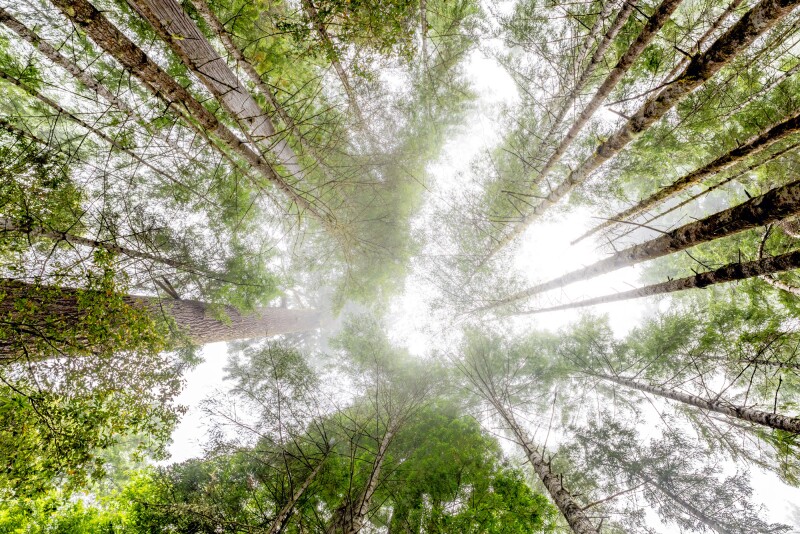
I first encountered old-growth redwoods at Big Basin Redwoods State Park shortly after moving to the Bay Area in 2007. From that moment, I felt there was something otherworldly about the forest. The ground was covered with thick layers of ferns, moss, fallen trees, and low-lying plants. Most of the ancient redwoods had branches starting over 100 feet high, and the trees were spaced far apart, allowing me to see the vastness of the park. Light filtered through the dense canopy in narrow beams, and the silence was unlike anything I had ever experienced before. It felt like a glimpse into another time and place.
Since then, I have visited old-growth redwoods in Northern California multiple times. Nothing compares to the feeling of being among them. Whether it’s their height (some exceeding 300 feet), their girth (some as wide as 20 feet), or their age (some over 2,000 years old), these trees evoke a deep sense of awe. They also emit a significant amount of oxygen—equivalent to 250 normal trees—and are highly efficient at sequestering carbon. These towering giants create a unique environment by pulling water from fog into their leaves and soil, forming a moist and shaded ecosystem beneath their branches and root systems.
Coast redwoods once stretched from Big Sur in Monterey County up along the coastal mountains for 450 miles to the northern border of California. However, between 1850 and 2000, over 95% of the original trees were harvested for their valuable lumber, which is resistant to rot, decay, and infestation. Today, while second-growth forests occupy much of the former old-growth areas, finding true old-growth redwoods is challenging. The closest option near San Francisco is John Muir Woods National Monument, but I recommend traveling farther to Redwood National and State Parks.
Redwood National and State Parks consist of three state parks and one national park: Del Monte Coast Redwoods State Park, Jedediah Smith Redwoods State Park, Prairie Creek Redwoods State Park, and Redwood National Park. Located about 320 miles north of San Francisco, these parks offer significantly more land and larger, older trees than Muir Woods. While over 1 million people visit annually, many only walk a short distance from their cars. However, there are over 200 miles of trails available, including accessible paths for people with disabilities.
In August, I returned to the parks for the first time in six years with my brother-in-law, Jack. He was interested in photographing the redwoods, and I was eager to explore on my own. On previous trips, I had hiked the 12-mile James Irvine–Miners Ridge loop, which included Fern Canyon and a walk along Gold Bluffs Beach. This time, I shortened the hike to 7.5 miles, taking a detour via the Clintonia Trail. I felt completely immersed in the forest, and for most of the trail, I didn’t see another person.
The redwoods are not just beautiful; they are resilient. Their thick bark protects them from fire, and they can grow around scars. When injured, they develop burls—swollen areas that store nutrients and genetic material for future growth. Their roots spread out widely, intertwining with neighboring trees to withstand strong winds and floods. Even when they fall, their decomposition supports the next generation of forest life.
It surprises me how few Californians have visited Redwood National and State Parks. The parks are far from major cities, which I see as an advantage. Many people don’t realize the difference between the redwoods they see in more popular spots and the ancient giants up north. Photos cannot fully capture the scale of a 2,000-year-old tree.
Jack, a former CEO of Miller Brewing Company, has become a professional photographer. He was captivated by the redwoods, though he found it challenging to capture their majesty on film. Unlike iconic landscapes like Yosemite or Yellowstone, the redwoods do not stand out in photographs. Their tops are hidden by dense branches, and even images showing their width struggle to convey their true size.
Park management also discourages visitors from seeking out the tallest trees, such as Hyperion, the world's tallest known tree at 380 feet. Its location is kept secret to protect it. Only "The Big Tree," located near Prairie Creek, is publicly marked. Despite its impressive height of 286 feet, it pales in comparison to Hyperion, which is just 10–15 miles away. A signpost points in two directions—one to "The Big Tree" and one to "Even Bigger Trees." This subtle humor reflects the spirit of exploration in the parks.
For me, it’s not about seeing the tallest or oldest tree, but about experiencing the forest itself. The redwoods have stood for thousands of years, enduring fires and human impact. They support each other in a way that inspires hope.
How to Get There
Redwood National and State Parks are a six-hour drive from San Francisco via Highway 101. I took a more scenic route along Highway 1, staying overnight in Sea Ranch on the Sonoma Coast. I continued through Mendocino Country until merging with Highway 101 at the northern end of the county. On the return trip, I took the slower Avenue of the Giants in Humboldt Redwoods State Park, which offers a peaceful alternative with many old-growth redwoods.
The closest airport is the California Redwood Coast Airport, located 30 miles south of the parks.
Where to Stay
On past visits, I stayed in Arcata or Eureka, small cities near Humboldt Bay. This time, I stayed at Roosevelt Base Camp, a former roadside motel in Orick, which has six rooms undergoing renovations. Nearby, there is a plan to reopen the Palm Café, which would be a welcome addition.
Where to Eat
Mojo Pizza, a red trailer in Arcata, offers fresh thin crust pizza with creative toppings. Trinidad provides more dining options, including Trinidad Bay Eatery and Grill and Larrupin' Café, a fine-dining spot.
What to Read
The Wild Trees by Richard Preston explores the search for the tallest redwoods and the dedication of those who climb them. The Ghost Forest by Greg King delves into the loss of old-growth redwoods and the efforts to protect what remains.
Greg Sullivan is the cofounder and CEO of TRIP MASTERY. You can reach him at [email protected].

Post a Comment for "Northern California Redwoods: Must-See Wonders"
Post a Comment