Portable Battery Sparks Emergency on Eastar Jet Flight
Recent Incident Highlights the Importance of Portable Battery Safety on Flights
A recent incident involving a portable battery catching fire on an Eastar Jet flight has brought renewed attention to the safety measures being implemented by airlines and aviation authorities. The event occurred on a flight bound for Incheon from Fukuoka, where smoke began to emerge from the battery approximately 15 minutes before landing. According to the airline, the situation was quickly addressed by a nearby flight attendant who used a fire extinguisher and bottled water to put out the flames, preventing any serious damage.
The airline reported that once the battery cooled down, it was placed in a metal container filled with water as outlined in their safety manual. A passenger on board described how a man alerted a flight attendant after noticing smoke coming from the battery. The attendant then moved toward the back of the plane to deal with the issue, while passengers handed over their water bottles. Other attendants filled an aluminum box with water and placed the battery inside, ensuring the situation remained under control.
Both passengers and crew remained calm throughout the incident, with regular updates provided about the fire and its resolution. This level of preparedness and quick response is a testament to the training and protocols in place for such emergencies.
New Safety Measures Introduced in September
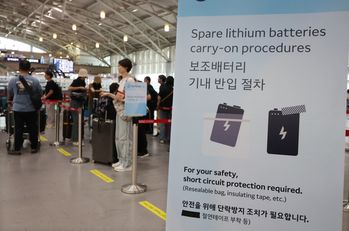
This incident comes just days after the Ministry of Land, Infrastructure and Transport introduced new safety rules on Sept. 1 aimed at preventing in-flight fires caused by portable batteries. These measures require airlines to attach heat-sensitive stickers to overhead bins that change color if temperatures rise. Additionally, all Korean carriers must carry at least two onboard isolation containers for emergency situations.
Under the new guidelines, portable batteries with a capacity of less than 100 watt-hours (Wh) can be carried on board without any restrictions. Batteries between 100 and 160 Wh require airline approval and are limited to two per passenger. Any batteries exceeding 160 Wh are strictly prohibited in the cabin. Furthermore, portable batteries cannot be checked in and must be carried on by the passenger.
Previous Incidents Highlight Ongoing Concerns
This latest incident follows a similar event on Jan. 28, when a fire caused by a portable battery destroyed an Air Busan flight preparing to depart from Gimhae International Airport for Hong Kong. Fortunately, all passengers and crew were evacuated safely. The National Forensic Service later determined that the fire originated from internal insulation failures in the battery.
In response to this and other incidents, officials from the Ministry of Land, Infrastructure and Transport conducted an on-site inspection on Feb. 3 to investigate the cause of the fire at Gimhae International Airport. These efforts underscore the ongoing commitment to improving safety standards and preventing future incidents.
Key Takeaways for Travelers
For travelers, it’s essential to understand the regulations surrounding portable batteries. While smaller devices are generally allowed, passengers should be aware of the limits and requirements for larger batteries. It's also important to follow the instructions provided by airline staff and to avoid placing batteries in checked luggage.
As the aviation industry continues to adapt to these challenges, the focus remains on ensuring the safety of both passengers and crew. The implementation of new safety measures and the quick response during recent incidents demonstrate the importance of vigilance and preparedness in the face of potential risks.

Post a Comment for "Portable Battery Sparks Emergency on Eastar Jet Flight"
Post a Comment