A Journey Through India's Temples, Villages, and Culinary Delights
A Unique River Cruise Through West Bengal
I didn’t expect a river cruise in India to involve being ushered into a courtroom. But this is exactly what happens at Chandernagore. One moment, I’m strolling along the tranquil tree-lined riverside in the former French trading post, and the next, guards are waving me into the imposing red building. Inside, I sidestep a street dog snoozing undisturbed on the cool mosaic-tiled floor as a barrister hurries past me with a stack of documents to present to the waiting judge.
I hasten to add that, along with the rest of my small group, I haven’t done anything wrong. This off-script visit, masterminded by our guide Deepak, encapsulates an extraordinary journey through West Bengal. Uninvited, but entirely welcome thanks to Deepak, we walk around the 19th-century building originally constructed as the Hotel de Paris by French occupiers. It’s a living archive, where white-shirted clerks hammer away at clackety old typewriters and mountains of dusty, yellowing papers teeter precariously on desks, floors and the tops of cupboards.
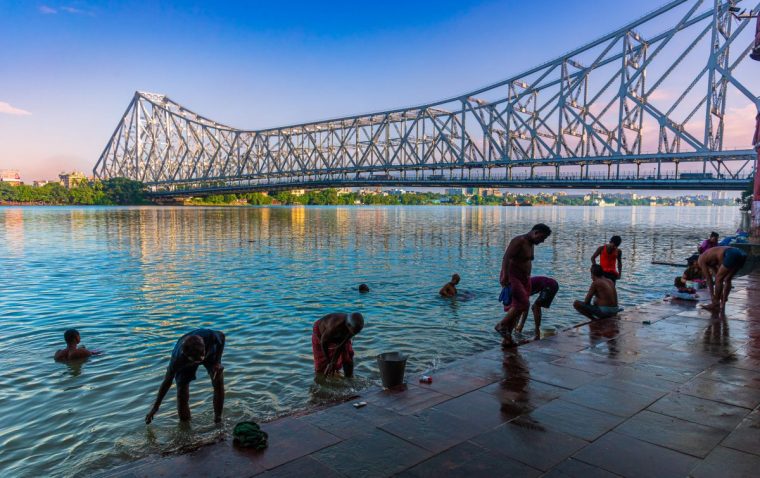
Chandernagore is one of the stops on a new nine-day river journey with Pandaw. The small-ship Asia specialist has crafted an itinerary that begins on the Hooghly River, which connects Kolkata with the Ganges. The 161-mile Hooghly is the westernmost and most commercially significant distributary of the 1,569-mile Ganges, which flows from the Himalayas to the Bay of Bengal. Kolkata is the largest city on the river, and in the 16th century the Hooghly became a major trade artery connecting West Bengal to the Indian Ocean.
Only a handful of river lines sail on the Hooghly, and during our entire cruise, we only see two other residential riverboats; one of them is also owned by Pandaw. I board the 24-passenger Katha Pandaw in Kolkata to a shower of fragrant petals thrown by crew members from the upper deck, while others place a vivid orange and yellow marigold garland around my neck. With its burnished wooden decks and gleaming brass fittings, it’s like stepping onto a charming, floating time warp. Modelled on the vessels that once sailed for the Irrawaddy Flotilla Company in Burma from 1865 to the 1940s, it has a fittingly retro vibe for our journey into Indian history.
My fellow shipmates are a cosmopolitan bunch, aged between 50 and 80, including couples, solo travellers and two sisters from the UK, America, Australia and Switzerland.
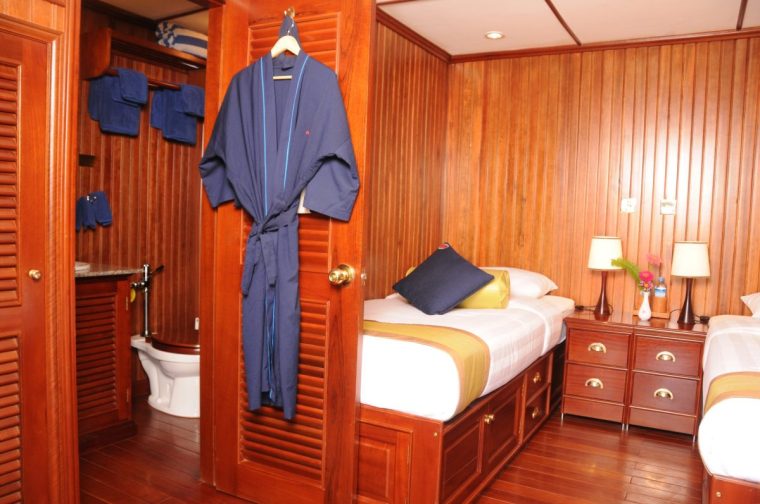
After a quick look around the top deck, with its al fresco dining area and indoor lounge, I unpack in my cosy wood-panelled cabin. Then we’re off to visit the memorial to the infamous Black Hole of Calcutta. British prisoners were incarcerated in the tiny, dark dungeon in Fort William when it was captured by the Nawab of Bengal, who invaded Calcutta in 1756. While the cell no longer exists, a tapering stone memorial is a stark symbol of the chain of events leading to the Battle of Plassey and the decisive victory of the British East India Company, under the leadership of Robert Clive.
After a night in Kolkata, the alarm in my cosy wood-panelled cabin goes off at 5am and an hour later we surround an akhara, a consecrated ground where soft earth is mixed with turmeric, mustard oil, milk and other natural ingredients. Inside, two men grapple fiercely. Their bodies twist and writhe as they practice kushti, an ancient form of wrestling demanding strength, discipline and ritual. The participants pray and train for hours before bathing in the Hooghly and heading to their day jobs. We watch in awe.
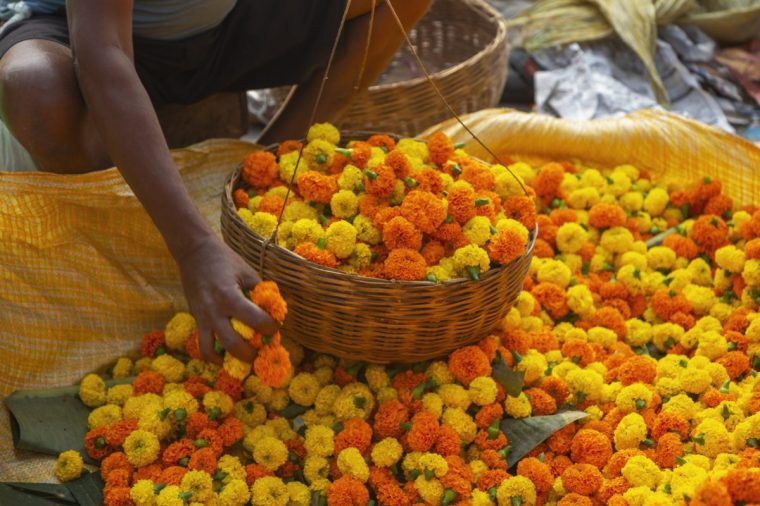
A short walk away is Malik Ghat Flower Market, the chaotic kaleidoscope of blooms that’s the largest market of its kind in India. I walk through narrow passageways where a slight breeze fans the intoxicating scent in the early morning air. Porters balance huge saucer-shaped baskets of flowers on their heads, while men and women sit cross-legged, transforming them into garlands and arrangements at astonishing speed.
That afternoon, Katha Pandaw sails out of Kolkata, modern office blocks and fading facades of once-grand colonial mansions making way for rural West Bengal. The shady, teak top deck provides a grandstand view of the ever-changing tableau of life, and even death, along the Hooghly and Ganges. Women wash jewel-bright saris, children bathe and fishermen cast nets in shimmering arcs from tiny wooden boats, just as their forebears have done for generations. Languorous doe-eyed cattle cool off in the shallows after working the nearby fields while a mourning family bears a stretcher to the river to anoint a deceased loved one with the sacred waters of the Ganges, revered as the goddess Ganga.
As we sail upstream along the Hooghly, we leave the boat to walk through tiny villages, followed by giggling children, or travel by tuk-tuk to temples. The village of Matiara rings with the sound of brass-making as men in dark workshops shape the alloy into gleaming bowls and ornaments, while in Murshidabad, the grand Hazarduari Palace reveals 100 fake doors, built to deter intruders.
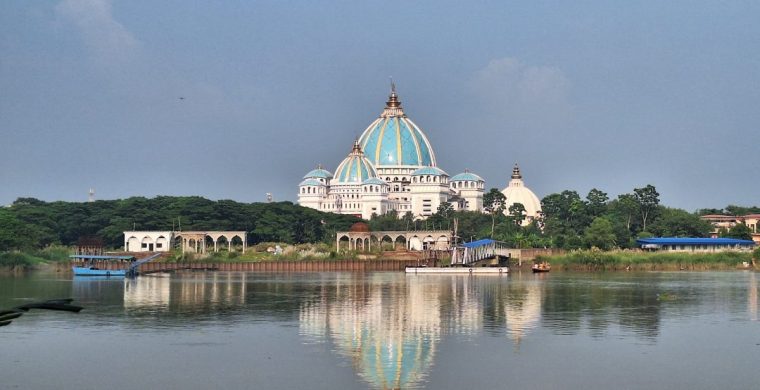
In Mayapur, Deepak again works his quiet magic to secure a tour around the usually off-limits Hare Krishna temple, under construction since 2010. The colossal building will become the world’s largest Hindu place of worship when it is completed in around 2027.
After each shore tour, we’re welcomed back to Katha Pandaw with chilled towels, cooling drinks and omnipresent smiles as shoes are whisked away to be cleaned. As the sun sets we sip G&Ts and cocktails before chef Sunil as his team serve delicately flavoured curries and other Indian specialities.
Talk is invariably about the day’s adventures, whether scheduled or unplanned. You can expect the unexpected on a voyage into the cultural and spiritual heart of India. The grand temples and majestic palaces are undoubtedly impressive, but for me, it is the spontaneous moments that forge everlasting memories.

Post a Comment for "A Journey Through India's Temples, Villages, and Culinary Delights"
Post a Comment