Wild West Tales and Pioneer Journeys Along Nebraska's Historic Scenic Byway
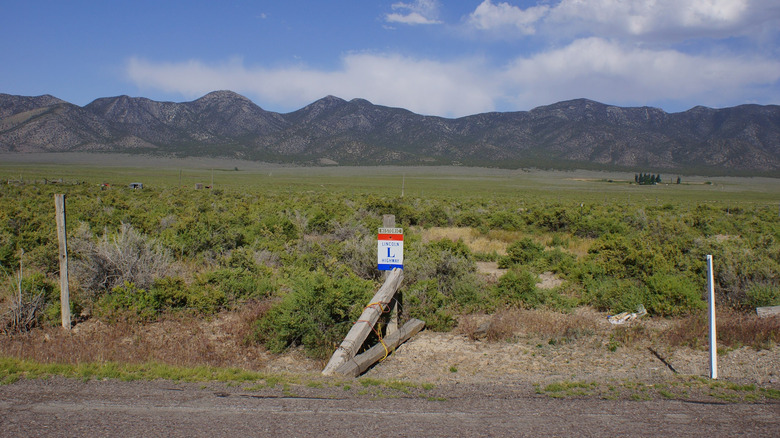
The Legacy of the Lincoln Highway: A Journey Through American History
Imagine a United States landscape that isn’t dominated by highways and interstates. Picture fields, farms, small towns connected by rail, and roads primarily found in urban areas. This was the scene following the great rail boom of the late 19th century, when approximately 170,000 miles of track were laid across the country. Before a comprehensive road system existed, the idea of a cross-continental highway for automobiles began to take shape. In 1913, automotive industrial leaders and car enthusiasts formed the Lincoln Highway Association (LHA) with the goal of creating a route from New York City to San Francisco. Thus, the Lincoln Highway was born.
Spanning roughly 3,000 miles along a winding path, the Lincoln Highway passed through several states, including New York, New Jersey, Pennsylvania, Ohio, Indiana, Illinois, Iowa, Nebraska, Wyoming, Utah, Nevada, and California. In Nebraska, it holds special significance as the only road that crosses the entire state—about 430 miles—and because both the state capital and the road itself are named after President Abraham Lincoln. While you can no longer drive the original route end-to-end, parts of it remain accessible, such as a 6-mile stretch between Fremont and Ames.
Today, modern Route 30 largely follows the original Lincoln Highway’s path, converging and diverging at various points. Along the curve from Grand Island to North Platte, Nebraska, notable landmarks like the Stuhr Museum, The Archway, and the Buffalo Bill Ranch State Historical Park serve as reminders of America’s pioneering spirit and the Old West.
A Historical Parallel to the Oregon Trail and Route 66
In many ways, the Lincoln Highway was the technological evolution of the famous Oregon Trail, which saw 300,000 to 400,000 settlers travel westward from the 1840s to the 1860s. It also shares similarities with Route 66, the iconic highway that ran from Chicago to Los Angeles and became a symbol of the bold, enterprising spirit of 1950s America. Despite its historical importance, the Lincoln Highway remains less discussed than these other routes, even though it helped define the image of the United States as a nation of cars and open roads.
Exploring Nebraska’s Lincoln Highway Heritage
For those interested in tracing this historic route, Nebraska offers several key stops. The Stuhr Museum, located near Grand Island and close to Route 30, is a must-visit. It sits on an artificial lake surrounded by expansive lawns and houses artifacts from the 1800s. One of the museum's highlights is Railroad Town, a period-accurate walk-through replica similar to Old Sturbridge Village in Massachusetts.
Further west, The Archway near Kearney provides another fascinating stop. This historical complex features an arched bridge over Interstate 80, replicas of historical buildings like the Sod House, and a museum focused on the era. It also includes a souvenir shop, trails, and educational activities for children.
About 90 minutes west of The Archway lies the Buffalo Bill Ranch State Historical Park, a vast outdoor area with trails and camping grounds dedicated to the legendary 19th-century showman, Buffalo Bill.
Hidden Gems and Historic Markers
Beyond these main attractions, Nebraska’s Lincoln Highway route is dotted with other historical sites. Starting near Omaha, the route winds through cities like Fremont, Columbus, Grand Island, Overton, North Platte, and Sidney. Along the way, travelers can find historical markers that act like a scavenger hunt, guiding them through the region’s rich past.
Some unique features include sections of red brick instead of asphalt, such as a 3-mile stretch in Elkhorn. While not as scenic as Fort Robinson State Park in northwest Nebraska, a detour to this location is worth considering for those seeking natural beauty and history.
Other notable spots include a small Lincoln Statue in Fremont, a "seedling mile" in Grand Island, and the short Lincoln Highway Bridge in Overton, complete with an "L" sign in red, white, and blue. These signs were placed by the Boy Scouts in 1928 as part of a highway-marking initiative.
Near Gothenburg, there is an untended section of the original highway, now just a flat, grassy path. For those looking for a quirky side trip, Carhenge in Alliance, Nebraska, offers a bizarre replica of Stonehenge made from old cars instead of stones.
Whether you're driving the original route or following modern Route 30, the Lincoln Highway offers a glimpse into America’s past and the enduring legacy of the automobile.

Post a Comment for "Wild West Tales and Pioneer Journeys Along Nebraska's Historic Scenic Byway"
Post a Comment