A Gritty Western Masterpiece for Cormac McCarthy Enthusiasts
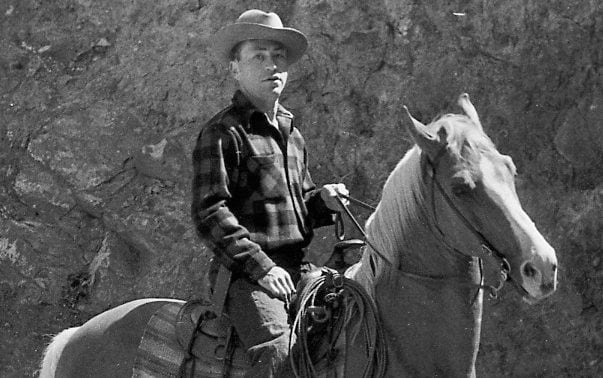
The Enduring Legacy of the Wild West
The myth of the Wild West may not hold the same ancient prestige as the tales of the Trojan War or Odysseus' journey, but for many Americans, it remains just as powerful today. The lone gunmen who enter schools and kill children, or climb to high places and take aim at a president with a store-bought, high-powered rifle, are seen as the modern-day descendants of figures like Jesse James, Butch Cassidy, and Billy the Kid. These individuals, much like their historical counterparts, believe they are simply doing what a man must do.
Charles Neider’s Western tale, The Authentic Death of Hendry Jones, first published in 1956 and now reissued, is a classic of its kind—though it may not fit neatly into any particular category. In some ways, it stands alone. Readers familiar with the disillusioned portrayals of the West found in the works of Cormac McCarthy and Larry McMurtry, or on screen through the films of Sam Peckinpah and Robert Altman, may not be aware of the unique vision that Neider brings to his story.
Born in Odessa and moving to the United States with his parents when he was five, Charles Neider (1915–2001) became a scholar specializing in the works of Mark Twain, Robert Louis Stevenson, and Leo Tolstoy. His fascination with the outlaw Bill Bonney, also known as Billy the Kid, led him to spend years researching the figure's life and crimes. This research culminated in The Authentic Death of Hendry Jones, a novel in which the central, fictional character, Hendry Jones—a slight, sandy-haired, neatly dressed, and attractive killer—is universally referred to as "the Kid."
A Nostalgic Reflection on the Past
The story takes place mainly in California, around Monterey, during the late 1880s. The narrative is told by Doc Baker, a former member of the Kid’s gang. His voice carries the cool, meditative tone of an old-timer reminiscing about the lawless days of hard riding, drinking, gunfights, horse theft, saloon bars, and saloon girls, all set against the backdrop of sudden and violent death.
In a foreword, musician Will Oldham, known by his stage name Bonnie “Prince” Billy, notes that the central theme of the book is “masculinity and violence approached with subtlety and gentility.” While Oldham is skeptical of the idea of the gunslinger as a real figure—questioning whether such people really existed, roaming from town to town with their quick draws—he acknowledges that it doesn’t matter if these figures are more fantasy than fact. As a character famously says in John Ford’s 1962 film The Man Who Shot Liberty Valance, “When the legend becomes fact, print the legend.”
America continues to craft its own grand, beautiful legend. Neider, too, is captivated by the vast beauty of this nation. One scene captures Doc Baker recalling the gang arriving in a coastal town after a long ride through dusty hills and barren plains:
It made us wonder how it would be to live in a place like that, with all the houses and faces and business and all the smells – grapes being pressed, eucalyptus trees, pine smoke, roses, meat curing, cheese drying, and the perfume you caught as you passed a lady in the street.
The novel also touches on the cost paid by indigenous peoples for the prosperity of the settlers. Doc Baker recalls stories from the “mission days,” when priests were busy converting the native population. With bleak irony, he observes: “The death rate among the Indians, after the padres had saved them, was something even the padres worried about, though they did not worry very hard or hard enough…”
A Celebration and a Deconstruction of Myth
Neider’s novel, which loosely inspired Marlon Brando’s 1961 Western One-Eyed Jacks, both celebrates and subtly deconstructs the myth of the West. While the characters are painted in Homeric colors, reminiscent of Winslow Homer’s work, the story also foreshadows the despair that would come later. From the late 1960s onward, the image of the lone gunfighter and his horse galloping free over the purple range fell apart in the killing fields of Vietnam, Iraq, and Afghanistan.
Final Thoughts
John Banville, winner of the 2005 Booker Prize for The Sea, has praised The Authentic Death of Hendry Jones. Published by McNally at £13.99, the book is available for £10.99 by calling 0330 173 0523 or visiting Telegraph Books.

Post a Comment for "A Gritty Western Masterpiece for Cormac McCarthy Enthusiasts"
Post a Comment