Is Japan Safe to Visit After the 7.5-Magnitude Earthquake?
Major Earthquake Strikes Northern Japan
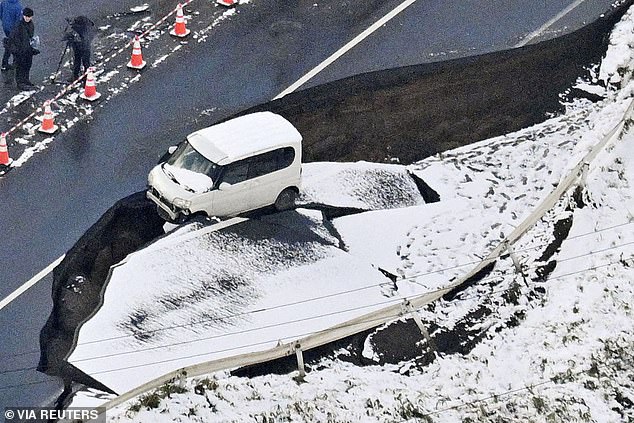
A powerful 7.5-magnitude earthquake struck northern Japan earlier this week, causing injuries to approximately 30 people. The tremor, referred to as a "megaquake," occurred on Monday at around 11:15 pm local time. Following the event, tsunami warnings were issued, with officials initially fearing that the country could experience a maximum 10-foot tsunami.
The epicenter of the earthquake was located off the east coast of Aomori Prefecture, approximately 33 miles deep beneath the seabed, according to Japan's Meteorological Agency (JMA). Although the initial concerns were high, the resulting waves only reached about 2.2 feet in some areas, and the aftermath was not as severe as expected.
Impact on Daily Life
In the wake of the earthquake, public transport was temporarily suspended by East Japan Railway, and flights were canceled at New Chitose Airport. Around 90,000 residents were advised to evacuate, and approximately 2,700 homes lost power. The JMA eventually downgraded the advisories early the next morning and lifted them entirely later.
Currently, there are no major tsunami warnings, warnings, or advisories in place from the JMA. However, a JMA official warned that there is a possibility of further powerful and stronger earthquakes occurring over the next several days.
International Response
The UK Foreign Office issued a statement regarding the situation, noting that all tsunami advisories had been lifted following the 7.5 magnitude earthquake off Aomori Prefecture on December 8. The statement also mentioned the JMA’s warning about the potential for another large-scale earthquake in the coming seven days.
Travel to Japan has not been completely ruled out by UK officials, so it may not be possible to cancel your trip due to special circumstances. Travelers are advised to check with their travel providers for updates.
Flights to and from New Chitose Airport appear to be running relatively normally, according to Flight Radar.
First-Hand Accounts
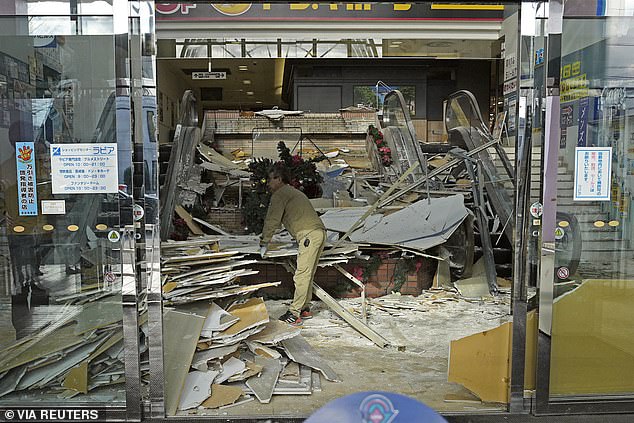
After the earthquake, a hotel worker in Hachinohe, Aomori Prefecture, described scenes of panic, with some people injured. He told public broadcaster NHK, “There appear to be several injured people, so we have called an ambulance and are currently responding to the situation. Everyone seems to be conscious.”
He described the shaking as starting with a vertical thrust before changing to a horizontal motion. “I was at work at the time and was holding down a shelf that had a lot of things in it. I think the shaking lasted about a minute. Things fell off the shelf, but I don't think there's been any damage to the building at this point.”
Footage broadcast on Japanese television showed shattered glass fragments scattered across roads. A staff member of the Disaster Prevention Division of Hachinohe City Hall said, “I felt the shaking twice. I was at work when the earthquake occurred. The horizontal shaking continued for about a minute, so much so that I felt I had to hide under my desk, and documents fell off the shelves.”
Government Response
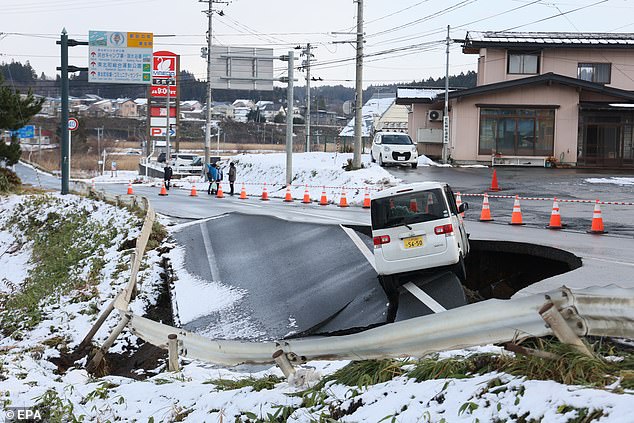
Prime Minister Sanae Takaichi stated that the government has formed an emergency task force to assess the extent of the damage. She emphasized, “We are putting people's lives first and doing everything we can.”
Seismic Activity in Japan
Japan is situated on top of four major tectonic plates along the western edge of the Pacific "Ring of Fire." It is one of the world's most seismically active countries, experiencing between 1,500 to 2,000 tremors annually, ranging from mild to severe. A tremor occurs at least every five minutes.
In March 2011, Japan recorded its most powerful earthquake, a 9.0 magnitude quake, which triggered massive tsunami waves reaching up to 133 feet in certain prefectures. This disaster resulted in 19,759 deaths and thousands of injuries. In January of last year, the Noto Peninsula earthquake claimed the lives of around 691 people.
Ongoing Concerns
Following the recent 7.6 magnitude earthquake, questions remain about whether Japan could face an even more devastating quake. Citizens are being advised to brace for potential aftershocks, and concerns persist about the possibility of another tsunami disaster with waves up to 10 feet high, threatening coastal communities and infrastructure.
Could Japan face another seismic nightmare as aftershocks loom in the wake of the recent powerful quake? The nation remains on high alert, with ongoing efforts to monitor and respond to any further seismic activity.

Post a Comment for "Is Japan Safe to Visit After the 7.5-Magnitude Earthquake?"
Post a Comment