Ripple the Great White Shark Pings Off Florida's Forgotten Coast
After a remarkable journey that took him from the northern regions to the southern coasts of the United States, an 11-foot, 6-inch great white shark has made his way into the Gulf of Mexico and the Florida panhandle. This impressive movement was tracked by OCEARCH, a non-profit research group dedicated to studying these ocean predators.
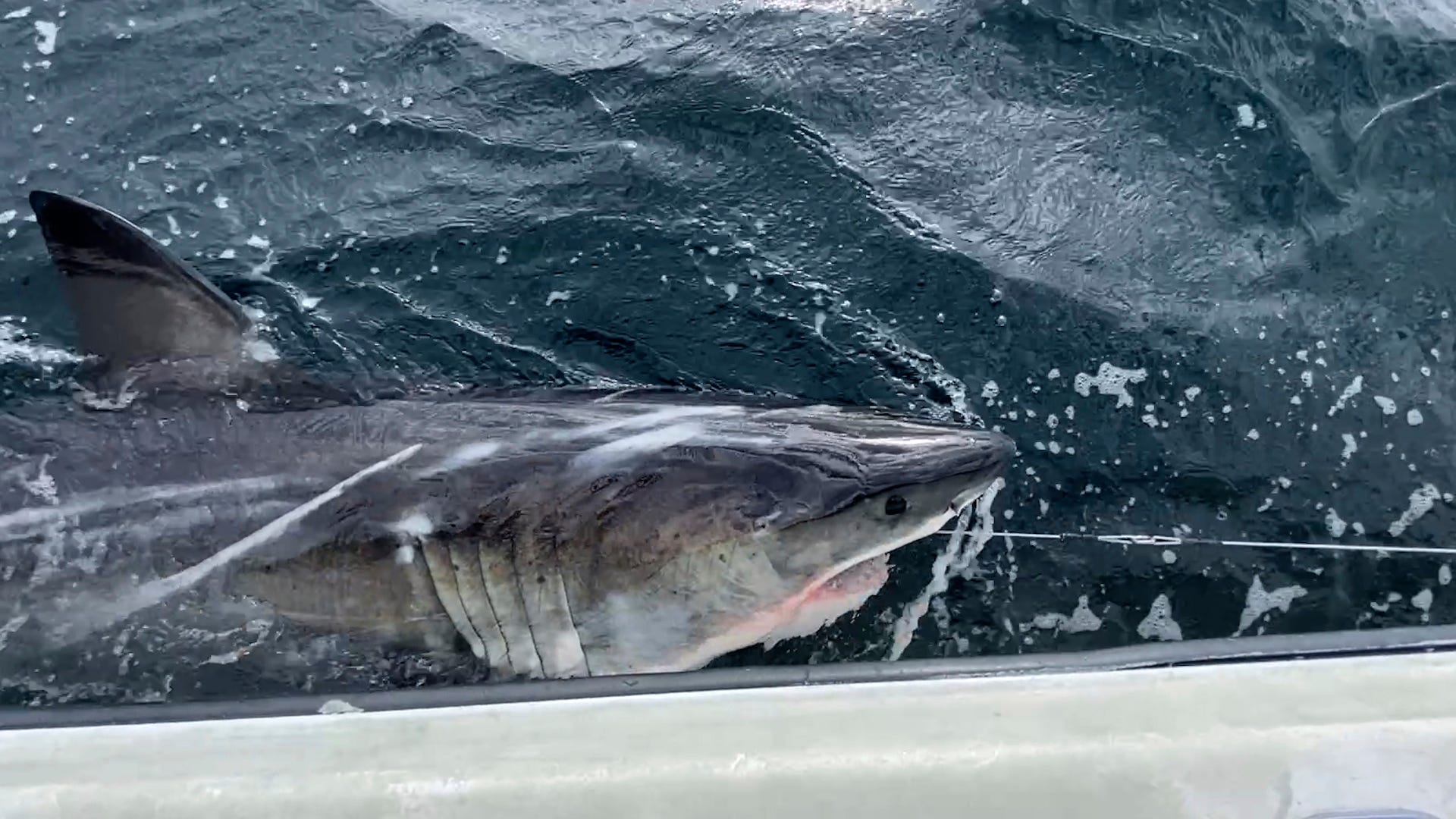
The shark, known as "Ripple," is a sub-adult male who was tagged and sampled by OCEARCH off the coast of Nova Scotia on September 30. Just 25 days later, he had traveled an impressive 1,770 miles, pinging off the coast of Jacksonville on October 25. As of now, Ripple has covered a total of 2,877 miles and has been detected in the Gulf of Mexico.
On December 8 at 6:20 a.m., Ripple pinged off the coast of Apalachicola, which is located in North Florida's panhandle, also known as the Forgotten Coast. A "ping" occurs when the satellite tag attached to Ripple’s dorsal fin breaks the water’s surface long enough to send location data to the OCEARCH shark tracker.
Great white sharks are not uncommon in Florida waters. According to OCEARCH researchers, these apex predators typically spend the warmer months in the northern regions, such as New England and Atlantic Canada, where they feast on high-calorie prey. As the temperature drops, they migrate south along the U.S. East Coast, sometimes reaching as far as Florida and the Gulf of Mexico.
Migration Patterns of Great White Sharks
- Northern Summer Months: Great white sharks often travel to the northern regions, such as New England and Atlantic Canada, where they can find abundant food sources.
- Southern Winter Migration: During the colder months, these sharks move further south, following the warmer waters and searching for food.
- Florida Waters: The state of Florida, especially its coastal areas, becomes a popular destination for great white sharks during the winter season.
Why Do Great White Sharks Migrate?
- Temperature Regulation: These sharks prefer warmer waters, which is why they move to the southern regions during the colder months.
- Food Availability: The migration is closely tied to the availability of prey. In the north, they feed on seals and other marine mammals, while in the south, they may target different species.
- Breeding and Reproduction: Some studies suggest that migration patterns are also influenced by breeding behaviors, although this is still being researched.
Tracking and Research Efforts
OCEARCH plays a crucial role in tracking and understanding the movements of great white sharks. By tagging these animals, scientists can gather valuable data about their behavior, migration routes, and habitat preferences. This information is essential for conservation efforts and helps in protecting these important members of the marine ecosystem.
What to know about OCEARCH great white shark Ripple
Ripple, a male sub-adult white shark, was tagged and sampled by OCEARCH on Sept. 30, 2025, in Mahone Bay, Nova Scotia.
He was 11 feet, 6 inches long and weighed 778 pounds.
Ripple was named after ripples on the water.
"The name Ripple carries a powerful meaning," the shark's OCEARCH tracker page states. "A ripple is the earliest sign of a wave—seemingly small, light, and playful on the surface, yet capable of growing into a force that moves oceans. In the same way, this sub-adult shark is just beginning his journey. Though young now, Ripple has the potential to grow into one of the giants of the sea, shaping the ecosystem around him as he matures."
Since being tagged, Ripple has traveled 2,877 miles.
Largest great white shark ever tagged by OCEARCH?
The largest great white shark ever tagged by OCEARCH is the "Queen of the Ocean" Nukumi.
Nukumi was tagged off Nova Scotia in 2020. Researchers estimated her to be over 50 years old.
The massive shark was 17 feet, 2 inches long and weighed a whopping 3,541 pounds.
According to her tracker, she traveled 5,635 miles in 191 days. Nukumi last pinged beyond the Mid-Atlantic Ridge on Apr. 11, 2021.
Biggest male great white shark ever tagged by OCEARCH?
The largest male great white shark ever tagged and released by OCEARCH is 13-foot, 9-inch Contender.
The 1,653-pound shark was tagged in the waters off the Florida-Georgia border in January 2025.
"Meet Contender, the ultimate ocean warrior! This powerful white shark was tagged on January 17, 2025, off the FL/GA coast, about 45 miles offshore," the shark's tracker page reads. "Contender is a mature male now contributing to OCEARCH’s mission of shark research and ocean conservation."
Contender's tag is active, last pinging Oct. 29 off the northern coast of Nova Scotia.
Contender spent several weeks in January and February off Florida's east coast, swimming as far south as Brevard County.
What time of year are great white sharks in Florida?
According to OCEARCH, white sharks begin a seasonal migration in the fall, from their summer feeding grounds around Atlantic Canada and New England and travel as far south as Florida and the Gulf, presumably for warmer waters and abundant food sources.
OCEARCH shark tracker: Follow great white sharks in Florida, beyond
North Atlantic great white sharks migrate as far south as Florida and the Gulf in winter, searching for warmer waters and more food sources.
OCEARCH is "a global nonprofit organization conducting unprecedented research on our oceans’ giants in order to help scientists collect previously unattainable data in the ocean," according to the group's website
OCEARCH has tagged 140 white sharks, many of them along the Eastern Seaboard and Nova Scotia.
You can follow their journeys on the OCEARCH shark tracker website or by downloading the OCEARCH Global Shark Tracker app.
This article originally appeared on Tallahassee Democrat: OCEARCH great white shark 'Ripple' pings off Florida's Forgotten Coast

Post a Comment for "Ripple the Great White Shark Pings Off Florida's Forgotten Coast"
Post a Comment