US Copies Iran's Shahed Drone for Mass Warfare
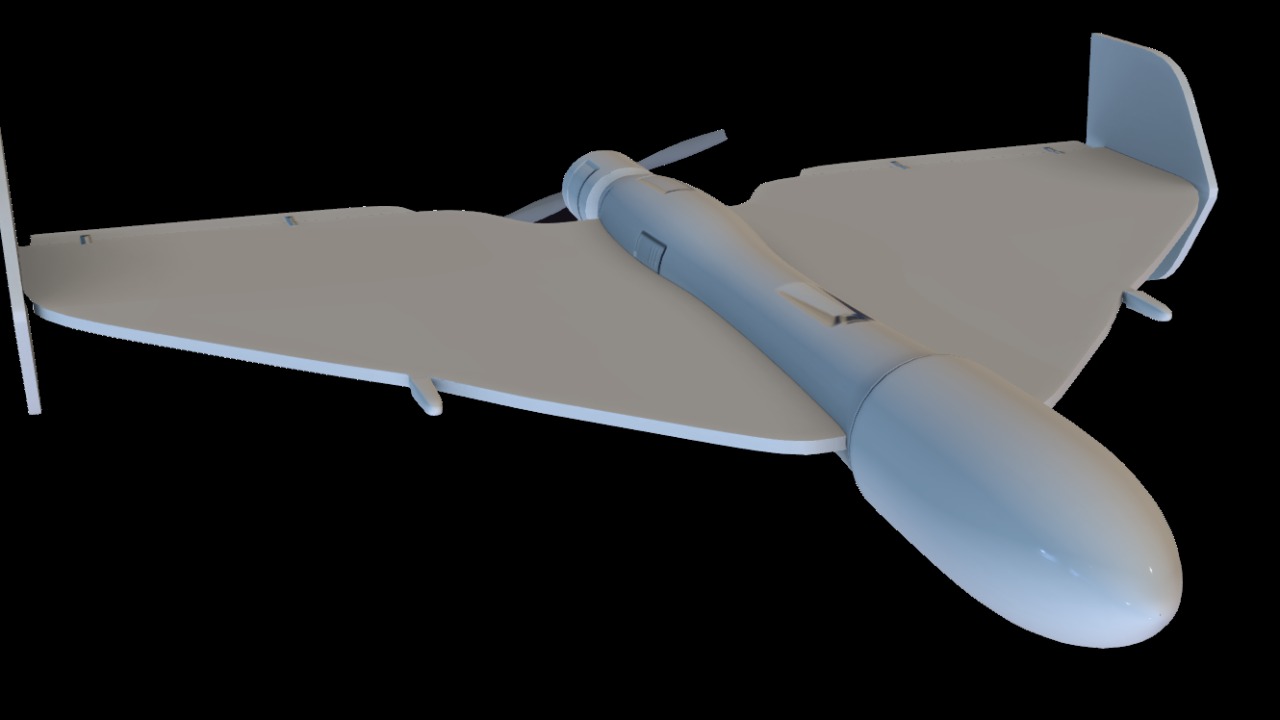
The Evolution of Airpower: From Iranian Influence to U.S. Innovation
The United States has quietly embraced a new model of airpower built on cheap, expendable drones, taking direct inspiration from the Iranian systems that have terrorized battlefields from Ukraine to the Middle East. By reverse engineering Iran’s Shahed family and fielding its own low-cost attack drones at scale, Washington is signaling that mass, not exquisite hardware, will define the next phase of aerial warfare.
What began as an effort to understand and counter a threat has evolved into a race to copy and surpass it, with American engineers now producing Shahed-style drones that can be launched in swarms, guided by satellite links, and built fast enough to matter in a prolonged conflict. The result is a new class of weapons that blur the line between offense and defense, and that could reshape how both the United States and its rivals think about air superiority.
From Iranian Experiment to Global Template
The starting point for this shift is the HESA Shahed 136, a one-way attack drone that Iran turned into a strategic tool by making it simple, rugged, and cheap enough to use in large numbers. The platform, produced by HESA and often described in Persian as a kind of “Witness” to distant targets, has been exported and adapted, including under the Russian designation Geran-2, and its very name, Shahed 136, has become shorthand for a new style of attritional air campaign that trades precision for volume and persistence.
Designed to fly low and slow with a distinctive engine note, the Shahed 136 has shown how a relatively crude airframe can still punch above its weight when used to saturate defenses and exhaust expensive interceptors. Reporting on its evolution notes that it was designed in Iran and then modified and mass-produced under license by Russia, a partnership that turned the Shahed into a favorite weapon for long-range harassment and infrastructure strikes.
Why Washington Decided to Copy the Shahed
For years, U.S. forces treated the Shahed threat primarily as a defensive problem, scrambling to find cheaper ways to shoot down volleys of drones without burning through high-end missiles. That mindset began to shift as commanders realized that the same attributes that made the Iranian system so troublesome for defenders—low cost, ease of production, and the ability to fly in large numbers—could be harnessed by the United States itself to saturate enemy airspace and complicate adversary planning.
American engineers and planners concluded that trying to outspend adversaries with ever more exquisite platforms would not solve the problem of mass, especially in a potential conflict where thousands of targets might need to be struck or defended simultaneously. Instead, they opted to mirror the Shahed’s philosophy while layering on U.S. strengths in networking and guidance, a choice that has produced a family of drones that are cheap enough to be expendable but smart enough to be coordinated.
LUCAS: The American Shahed Clone
The centerpiece of this effort is the LUCAS program, a Low Cost Unmanned Combat system that American officials describe as one of the most rapid reverse engineering projects in recent U.S. defense history. Built as a direct response to the Shahed 136, LUCAS takes the basic one-way attack concept and wraps it in a modular architecture that can accept different warheads, sensors, and communications packages, allowing commanders to tailor each wave of drones to specific missions while still benefiting from mass production.
What sets LUCAS apart is not just its resemblance to the Shahed 136 in silhouette and mission profile, but the way American engineers have integrated it into a broader kill chain that includes satellite links, swarming algorithms, and real-time retasking. Reports on American Shahed-style systems describe how these Low Cost Unmanned Combat platforms can be launched in coordinated groups, share targeting data, and adjust their routes mid-flight, turning what was once a crude one-way munition into a semi-networked strike package.
Lucas in the Field: Swarms, Datalinks, and Middle East Deployments
The first real test of this new approach has come in the Middle East, where American Shahed 136 Clones Sent To Middle East Have Satellite Datalinks and Swarming Capabilities have been deployed to support regional operations and to stress-test how well massed drones can integrate with existing air and missile defenses. These deployments show that the United States is not treating LUCAS as a lab curiosity but as an operational tool, using it to probe adversary radar coverage, soak up interceptor fire, and create openings for more valuable aircraft.
Operational commanders in the region have emphasized that these drones are not meant to replace crewed aircraft or high-end missiles, but to complement them by providing a cheap, persistent presence that can be surged quickly in a crisis. Specifications from manufacturers in Arizona describe drones with an 8 ft wingspan that are robust enough for repeated handling yet inexpensive enough to be treated as expendable.
Lucas versus Shahed: What Actually Changed
On the surface, the American clones look like straightforward copies of the Shahed 136, right down to the delta-wing layout and pusher propeller that have become visual shorthand for this class of drone. Under the skin, however, the differences are significant, with U.S. versions incorporating satellite datalinks, encrypted communications, and swarming logic that allow them to coordinate in ways the original Iranian systems could not.
There are also differences in how the two systems are integrated into their respective militaries. Iran has used the Shahed 136 as a tool of strategic harassment, often launching small numbers at civilian infrastructure or symbolic targets, while U.S. doctrine envisions LUCAS as part of a layered strike complex that can be scaled up or down depending on the mission.
Inside the Reverse Engineering Sprint
Behind the rapid fielding of LUCAS lies a crash program that pulled together captured wreckage, intelligence assessments, and commercial off-the-shelf components to replicate and then improve on the Shahed 136. American engineers treated the Iranian system as a baseline, mapping its airframe, propulsion, and guidance, then substituting domestic parts where possible and upgrading the electronics to support satellite control and swarming.
That sprint was not just about copying hardware, it was also about building a production system that could scale. The United States leaned on a mix of traditional defense contractors and smaller firms to stand up assembly lines capable of turning out large numbers of drones without the long lead times that plague more complex aircraft.
Lucas on the Launcher: How the US Plans to Use Swarms
Operational footage and briefings show that U.S. forces are not treating LUCAS as a boutique capability, but as a workhorse that can be launched from simple rails, truck beds, and ship decks in large numbers. In one widely circulated clip, U.S. units deploy low-cost, one-way attack drones called Lucas to saturate enemy airspace and overwhelm air defenses.
Shorter clips highlight the same theme from a different angle, focusing on how the US military finally cloned the Iranian Shawhead drone and how Americans were able to rapidly produce and deploy Luc units in meaningful numbers. These videos underscore the speed with which the program moved from concept to field use.
Defending Against the Weapon You Just Copied
There is an irony in the fact that the same U.S. Air Force that sought an exact replica of the Shahed to help develop defenses is now fielding its own version of the weapon at scale. Earlier efforts to build test articles and fly them at ranges in Florida were aimed at understanding how to detect, track, and intercept such drones, and those lessons are now feeding back into both offensive and defensive doctrine.
By building and flying its own Shahed-style drones, the United States is effectively training against itself, using LUCAS and related systems as stand-ins for Iranian and Russian weapons in exercises that stress air defense units and command centers.
The New Logic of Cheap Mass Warfare
What emerges from all of this is a new logic of airpower that prizes quantity, adaptability, and integration over sheer technological sophistication. The Shahed 136 showed that a relatively simple drone, produced in large numbers and used creatively, could punch holes in even well-equipped defenses, and the U.S. response with LUCAS and other clones suggests that Washington has absorbed that lesson.
For adversaries, this shift means that the United States is no longer relying solely on a small number of exquisite platforms that can be targeted and attrited, but is instead building a layered force that can absorb losses and keep fighting. For allies, it offers a template for how to build their own low-cost drone fleets, potentially using U.S. designs or partnering on production.
More from HAWXTECH.NET
Did archeologists find 10-foot giants in Nevada cave?
Astronomers track object entering solar system at impossible speed
Toyotas water powered engine could signal the fall of EV’s
Giant underground structures uncovered on mars by NASA

Post a Comment for "US Copies Iran's Shahed Drone for Mass Warfare"
Post a Comment