Volcanic Ash Made Roman Concrete Last Thousands of Years: Study
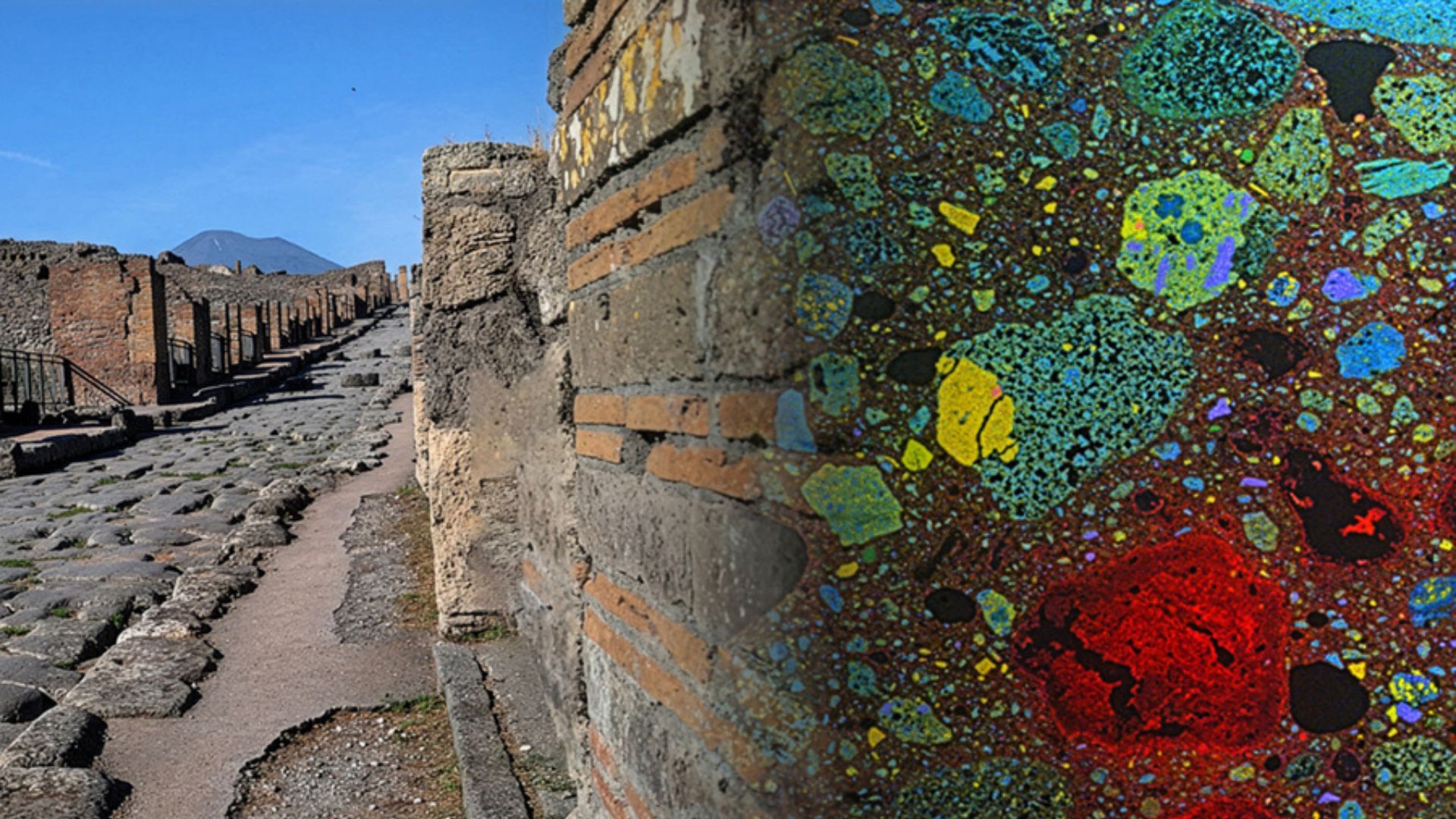
Roman concrete is often celebrated as one of the most remarkable engineering achievements in history. Its durability has allowed the Empire’s monumental structures to stand for over two millennia, with many buildings, bridges, and aqueducts still in use today. Now, a groundbreaking discovery at a well-preserved Pompeii construction site has unveiled the secret behind this extraordinary longevity.
“We were fortunate to access this time capsule of a construction site and find piles of materials ready to be used for the wall. With this paper, we aimed to clearly define a technology and associate it with the Roman period in 79 C.E.,” said MIT Associate Professor Admir Masic, who led the research.
The team uncovered the Romans’ “hot-mixing” technique, a method that involved mixing lime fragments, volcanic ash, and other dry ingredients before adding water. This process generated heat, which trapped highly reactive lime as tiny, gravel-like “clasts” within the concrete. When cracks formed over time, these lime clasts dissolved, actively repairing the damage.
The Hot-Mixing Method
In this new study, Masic’s team analyzed an exceptionally preserved ancient construction site in Pompeii, unearthed from the 79 C.E. eruption of Mount Vesuvius. The research involved examining samples from different construction stages: pre-mixed raw materials, a wall under construction, completed walls (buttress and structural), and mortar used for repairs.
The Pompeii site provided definitive evidence that the Romans used hot-mixing for their concrete. Concrete samples from the site contained the self-healing lime clasts. The team also found intact quicklime fragments mixed with other dry ingredients in a raw material pile, confirming the initial step of the hot-mixing process.
“These results revealed that the Romans prepared their binding material by taking calcined limestone (quicklime), grinding them to a certain size, mixing it dry with volcanic ash, and then adding water to create a cementing matrix,” Masic noted.
The site also offered valuable insights into the volcanic ash itself. Pumice particles, reacting with the concrete’s internal environment over time, created new mineral deposits, further strengthening the material. This process significantly enhances the concrete’s long-term strength and its ability to self-repair years after the structures were initially built.
“This material can heal itself over thousands of years. It is reactive and highly dynamic. It has survived earthquakes and volcanoes. It has endured under the sea and resisted degradation from the elements,” said Masic.
Modern Concrete Solutions
As the global construction industry seeks more sustainable and durable materials, the Roman secret offers a promising blueprint. Masic’s company, DMAT, is already working to translate these ancient lessons into modern concrete solutions.
“This is relevant because Roman cement is durable, it heals itself, and it’s a dynamic system,” Masic said. “The way these pores in volcanic ingredients can be filled through recrystallization is a dream process we want to translate into our modern materials. We want materials that regenerate themselves.”
This hot-mixing method also challenges the architectural dogma established by Vitruvius, the esteemed Roman architect whose writings laid the foundation for architectural theory.
The findings were published in the journal Nature Communications on December 9.

Post a Comment for "Volcanic Ash Made Roman Concrete Last Thousands of Years: Study"
Post a Comment