Austin Weighs Incentives to Attract Southwest Expansion
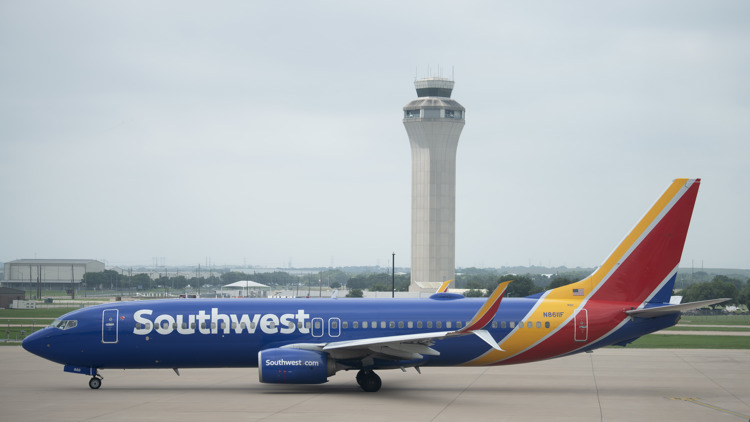
Austin and Southwest Airlines Forge Expansion Deal
On Thursday, city leaders in Austin approved a significant deal with Southwest Airlines to expand the airline's presence at the Austin-Bergstrom International Airport. This agreement is expected to create new local jobs and enhance the city's economic landscape.
The plan involves providing Southwest Airlines with $2,750 per new Austin-based hire over the next five years. In return, the airline is anticipated to generate 2,000 high-paying jobs with an average wage of $180,000. Additionally, Southwest will invest in workforce programs such as the city’s newly established Austin Infrastructure Academy.
Southwest is currently the largest airline operating at Austin-Bergstrom International Airport, handling more than 40% of all passenger traffic. The airline is looking to expand its facilities and operations to support more flights and jobs. Austin is among the cities under consideration, so Southwest is exploring state and local incentives as it makes its decision.
“Southwest appreciates the leadership of Mayor Kirk Watson and the Austin City Council, and we look forward to working with them as we make Austin and Central Texas an even bigger part of Southwest’s future,” a spokesperson for the airline stated in a Wednesday release.
City council members are set to consider whether to move forward with the proposed incentive program for the airline at their meeting on Thursday.
“This agreement marks a promising step forward by delivering more reliable, frequent flights for travelers while also bringing thousands of strong union jobs to our city,” said Mayor Pro Tem Vanessa Fuentes, whose district includes the airport. “By prioritizing local hiring, living wages and strong worker protections, we can make sure this project truly benefits the people who call Austin home.”
City staff estimate that the project will bring in nearly $20 million in local tax revenue. The incentive program will last for five years and pay Southwest up to $5.5 million.
“These jobs are projected to generate $816,000,000 in increased local output (GDP), $748,000,000 in increased local earnings and $19,800,000 in local taxes annually including property, sales, hotel occupancy and mixed beverage taxes added to the local economy,” according to city documents. “$11,850,000 in tax revenue annually is expected to be recognized by the city of Austin including $1,190,000 in retail sales tax, $3,800,000 in property tax and $6,860,000 in Hotel Occupancy Tax.”
A fiscal impact analysis found that the Southwest expansion would create 5,100 indirect net new local jobs across various industries, including construction, transportation, food and hospitality service, real estate, health care, financial services, and manufacturing.
In addition to the taxes, the jobs are also expected to generate $816 million in increased local output. The airline will develop city-owned property at a capital expenditure estimate of $7.5 million.
The city per-job award of $2,750 per job hired will only apply if the person lives in the city of Austin. Southwest would also donate 10% of its per-job incentive to the city's new child care assistance fund. The funding would be contingent upon performance and compliance evaluations.
“Austin is a city that is on the move,” said Austin Mayor Kirk Watson at an event on Wednesday to showcase the airport’s upgraded baggage handling system. “Good things are happening in Austin, Texas, and our airport has to move with it.”
As Austin-Bergstrom International Airport continues a multibillion-dollar expansion, officials are in the process of renegotiating contracts with airlines for the next 10 years. Airlines have always had to pay rent for gates, runways, and space inside the terminal. Now, the airport needs to commit to long-term deals with the airlines in order to help fund the ongoing expansion project.
Southwest is planning to nearly double its gate count when the new terminal opens in 2030. The airline is vying to be an “anchor tenant” in the airport’s second terminal, which could have at least 20 more gates. The Dallas-based airline currently has 10 gates at the airport and could grow that to 18 gates with the expansion.
Airlines that don't want to commit to the long-term deals can still operate month-to-month, but they'll have to pay a 15% penalty. According to the city, by expanding Southwest’s operational footprint and capacity at AUS, and increasing staffing levels, gate activity and aircraft availability, it will translate to better reliability with flight scheduling, fewer cancellations, greater flexibility during irregular operations and more flight options for travelers.
“As Austin continues to grow, this investment helps ensure that air service keeps pace with demand, supports tourism and business travel and improves the overall passenger experience,” the city document said.

Post a Comment for "Austin Weighs Incentives to Attract Southwest Expansion"
Post a Comment