ICE Raids Georgia Battery Plant, Korean Workers Put on Leave
Impact of Immigration Raids on South Korean Battery Plants in the U.S.
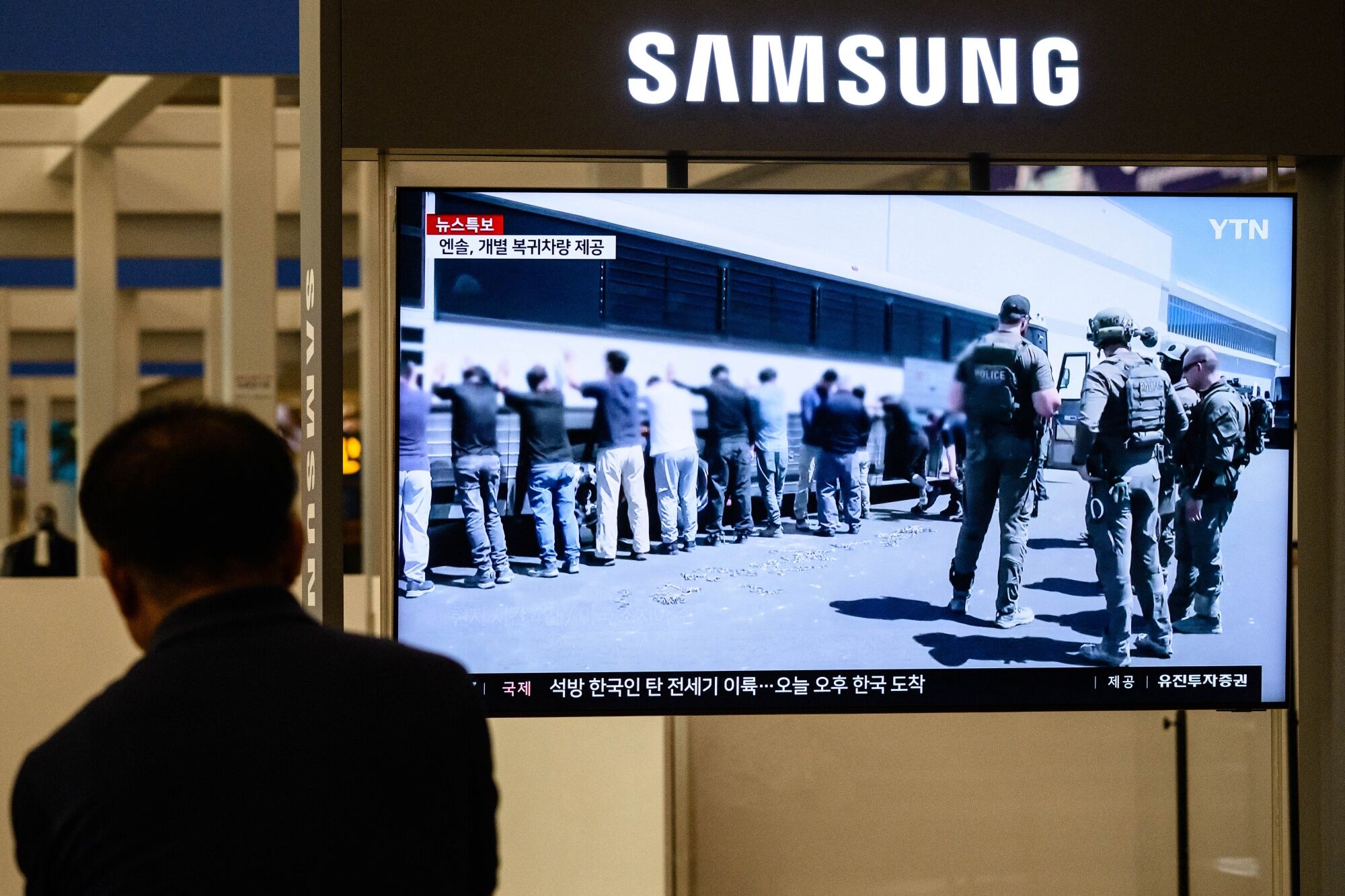
A recent immigration raid at a battery plant in Georgia has created widespread uncertainty among workers and companies involved in the growing electric vehicle (EV) manufacturing sector. The incident, which took place earlier this month, has led to significant disruptions, including workers staying home and delays in production schedules. This situation is particularly concerning for South Korean companies that have made substantial investments in the U.S. as part of their expansion into the EV market.
Ken Shim, president of Woowon Technology Inc., shared his concerns about the impact of the raid on his company's operations. His team includes South Korean engineers who are legally working in the U.S. under visas that allow them to perform specific tasks such as training local employees and setting up equipment. However, the recent immigration enforcement actions have caused anxiety among these workers, prompting Shim to offer paid time off to help ease their stress.
Shim, an American citizen with over a decade of experience in the U.S., emphasized that all his employees are operating within the legal framework. Despite this, the raid has raised questions about the safety of foreign workers, especially those on temporary visas. He advised his staff to carry their visa and passport documents at all times, citing rumors of immigration agents questioning people at stores like Walmart and H Mart.
The situation at the Hyundai Motor Co. and SK On Co. plant near Cartersville, Georgia, highlights the broader challenges faced by South Korean companies in the U.S. These firms have invested billions in expanding their presence in the EV industry, anticipating a surge in demand. However, recent economic headwinds, including slower EV sales and the elimination of consumer tax credits by Republicans, have added pressure to their business plans.
The immigration crackdown has further complicated matters for these companies. The raid on the Hyundai-LG plant outside Savannah, where approximately 475 workers were detained, has led to delays in construction projects. Hyundai has acknowledged that the incident set back its site near Savannah by several months due to worker fears of being detained.
South Korean companies are planning or building around 22 plants in the U.S., many of which rely on the quick movement of trained engineers across international borders. This practice is now under threat due to heightened immigration scrutiny. Several major EV battery plants under construction in the U.S. are considered vulnerable to similar raids, as they still require the services of skilled technicians on temporary visas.
The situation has placed President Donald Trump in a difficult position. While he has emphasized the importance of enforcing immigration laws, he also acknowledges the need for specialized foreign workers to train Americans in complex manufacturing roles. This tension between immigration enforcement and foreign investment could have long-term implications for U.S.-South Korea relations, especially given ongoing discussions about tariff reductions and investment agreements.
LG Energy Solution Ltd., another key player in the EV battery market, has stated that its U.S. operations continue without the support of foreign engineers whose visa statuses remain uncertain. Bob Lee, president of North America for LG, described the situation as manageable but noted the need for contingency planning.
For companies like Woowon Technology, the impact of the raid has been mixed. Established plants, such as the SK facility in Commerce, Georgia, have been less affected because the local workforce has already been trained. However, new plants that are still in the setup phase face delays due to incomplete training programs.
Despite the challenges, companies are adapting to the evolving landscape. Woowon Technology has invested in a workshop in Kentucky, supporting a joint venture with Ford Motor Co. and SK. The company remains concerned about the potential for future detentions, even though it adheres to immigration laws. A statement from the company highlighted the risk of negatively affecting Korean companies' willingness to invest in U.S. manufacturing if the uncertainty persists.
Initially, Shim believed the raid was a misunderstanding that would be quickly resolved. However, the ongoing uncertainty has changed the perception of safety and stability in the U.S. for foreign workers. As the situation unfolds, the impact on the EV industry and international business relations will likely become more apparent.

Post a Comment for "ICE Raids Georgia Battery Plant, Korean Workers Put on Leave"
Post a Comment