Immigration Raids and Tariffs Endanger Florida Keys Lobster Industry
The Struggle of Florida’s Lobster Fishermen
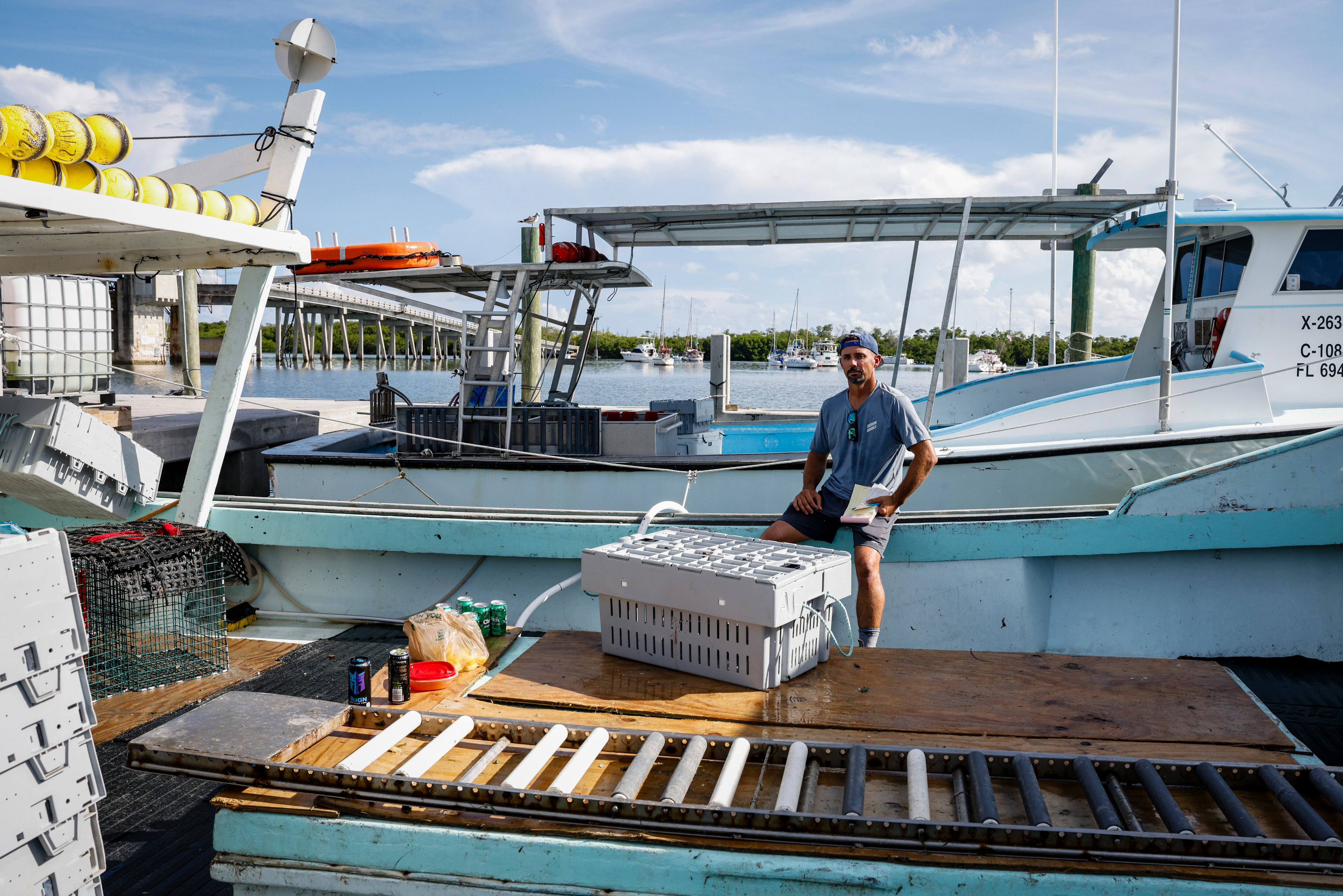
In Marathon, Florida, a small town almost halfway between Miami and Key West, lobster fishermen are being hired at $250 a day. However, the job is far from glamorous. Many who attempt it quit after just one day. A "long" day starts at 1 a.m., with fishermen heading out to the Gulf of Mexico and returning at 6 p.m. After hauling and resetting 500 wooden traps that weigh nearly 150 pounds each when filled with lobsters, the work is intense and demanding. The process is a choreographed effort: one person hauls up the trap, another pulls out the lobsters, measures them, and stows them, while a third cleans the cage and stacks it for re-entry into the sea.
This labor-intensive work requires a deep connection to the sea. Many captains of the lobster boats in the Keys come from long lines of fishermen, and most of the crews are from Corn Island and Bluefields in Nicaragua, where artisanal shellfishing has been a way of life for centuries. But now, as Florida's commercial lobster season begins, U.S. immigration authorities have been boarding vessels and arresting crews at sea—even those with work permits. This has led to many immigrant fishermen leaving or refusing to go out to sea, causing significant financial losses for boat operators.
Boats sit tied up at the docks without crews, and the traps—tagged and ready—pile up like Tetris pieces in the shipyard lots. Everyone involved in the industry fears they are witnessing the end of an era, as the sector faces challenges from hurricanes, gentrification, tourism, and Trump’s tariffs.
Jerome Young, a captain whose family has fished there for three generations and chairs the Florida Keys Commercial Fishermen’s Association, describes the situation as dire. His boat was boarded by Border Patrol agents in early August, and all four of his crew members, who were Nicaraguan immigrants, were arrested. A post about the arrest on CBP’s Facebook page sparked criticism among captains and boat owners, but the news spread quickly through WhatsApp groups used by fishermen to warn each other about raids and checkpoints at sea.
Immigrant fishermen are fleeing due to fear of arrest and deportation, or worse, months in detention centers. One fisherman, hiding in the shipyards, says he and his crew had work permits, Social Security numbers, and passed E-Verify checks. Now only he remains, his right-hand man. “They’re the best workers I’ve ever had. They were the dream team,” he says with regret.
After the incident on Young’s boat, several captains met at the Customs and Border Protection (CBP) office in Marathon to complain. An agent told them it didn’t matter if the fishermen had work permits, as Trump’s policies require them to leave, and they could fight it in court. Captains also say CBP agents are riding aboard Coast Guard vessels. While the Coast Guard focuses on safety, it can assist other federal agencies such as CBP in their operations. CBP did not respond to a request for comment, but a spokesperson for the Department of Homeland Security stated that Marine Interdiction agents routinely board vessels in search of illegal immigrants.
Young explains that finding crew is already difficult, and the Nicaraguan fishermen are fluent in English, smart, and hardworking. One of those arrested had been with him for 15 years and practically ran the operation. “We pay these migrant workers a lot,” he says. “It’s not that we hire them because they’re cheap, it’s because we can’t find other people to do this kind of work.”
Most of the immigrant fishermen come to work but have families in Nicaragua and send remittances. One employee had a list of 15 or 20 people he sent money to. “He sacrificed his time away from his family to be here. It’s not really an option for them. They have to stay and work.” His wife earns about $120 a month, and his daughter, born sick, requires monthly medicine costing $500.
The 47-year-old started fishing at age nine and has seen many others come to the docks from Canada, Alaska, and Maine—none lasting more than a weekend. He likes fishing, though it is hard. In Nicaragua, it’s done by hand, requiring skill rather than strength. “You have to know how to grab the trap to pull it, to lift it,” he says, demonstrating the technique. “When it’s in the water, with the water trapped in the wood, it weighs more. If you use force, it’ll kill you.”
His boss continues to pay him even if he doesn’t go out to sea, but he doesn’t know how much longer he can hold out. He still has 1,000 traps on land and no crew to set them, and 1,000 at sea that they haven’t been able to check. “I want to work, but I can’t. I’ve never been to jail. Not here, not there in Nicaragua, not anywhere. I’ve never had any problems. I’ve always followed the law.”
Ryan Irwin, another captain, says the crew is like family and friends. Authorities have overnight decided to get rid of them. “When you see the same crew, the same people on a boat for years, it’s because they’ve earned their place, because they’re hard workers.” Left without a crew, his 64-year-old father had to return to captaining, while he worked in the back of the boat, manning the winch.
Some immigrant fishermen arrived in the Keys with H-2B visas, for non-agricultural workers. During Biden’s administration, some took advantage of humanitarian parole or CBP One programs, left, and then returned legally with work permits. But in April, the Trump administration canceled those programs. When authorities boarded his boat, they checked the work permits and arrested the crew.
According to Young, the H-2B visa program doesn’t fit the industry because the dates don’t coincide with the seasons. He longs for reform to the system that would include a category for commercial fishermen. “We need to expand that program and recognize that this industry has historically needed immigrant labor. It’s something that, nationally, we can’t cover on our own, and we shouldn’t have to go through all these obstacles.”
The industry is also threatened by the gentrification of the Keys. “The land we have available to store our traps is valuable property. There are very few commercial maritime properties available in the Keys,” he adds. “They’re becoming more expensive every day, and that extra expense weighs heavily on us.”
The backbone of the Florida Keys is the A1A highway, known as the Jimmy Buffett Highway, stretching 200 kilometers from Florida City to Key West. Trap fishing in the Keys predates tourism by centuries. For the earliest settlers, it was mere subsistence, but since the early 20th century, Key West was a well-known commercial source of lobster, conch, and sponges—long before it became a popular tourist destination that has gradually displaced fishermen.
The lobster caught in the Keys is the Caribbean spiny lobster, preferred in Asia and Europe for its flavor, texture, and versatility in traditional recipes. Florida has strict regulations on minimum lobster size, closed seasons, and sanitary measures, which help make the spiny lobster among the best in the world. That’s why restaurants and distributors in China and some European countries pay premium prices—far more than local restaurants and markets can offer.
But Trump’s tariff war has made buyers uncomfortably wary, says a captain who asked to remain anonymous. “They say if they buy a couple million dollars’ worth of lobster and the next day Trump wakes up and says ’145% tariffs on China,’ they lose everything.” The situation is so volatile that sometimes there’s a price per pound when they go out fishing that may have changed by the time they return in the afternoon.
“We’re not going to make it to the end of the season. We have bills to pay. It takes a lot of money to keep this going.” Going out fishing costs at least $1,300 between staff and fuel, whether he catches a fish or not. That’s why he has to ensure all 500 traps are in play. That’s why he needs his “dream team.” With an inexperienced crew, he would barely manage to haul 200 traps—and spend twice as much.
During the off-season, he spent about $35,000 on repairs and other operational expenses, which he normally recovers in August—but this year hasn’t been the case. “To do this for a living, you have to truly love it. It’s hard and thankless. We risk our lives out there every day. But nothing compares to the feeling of seeing those traps come out of the water full of lobster,” he says. “I should be fishing every day.”

Post a Comment for "Immigration Raids and Tariffs Endanger Florida Keys Lobster Industry"
Post a Comment