Is Japan Safe to Visit After Recent Earthquakes?
Aftershocks and Impact of the 7.5-Magnitude Earthquake in Japan
Aftershocks have been felt across Japan following a 7.5-magnitude earthquake that struck the country on Monday. The quake has resulted in at least 51 injuries, and the Japan Meteorological Agency (JMA) has issued warnings about the possibility of more powerful tremors in the coming days.
On Tuesday, the weather agency issued its highest-level alert, covering an area of approximately 800 miles from Japan’s northeastern coast, stretching from Chiba—just east of Tokyo—to Hokkaido. This alert underscores the ongoing concern for safety as aftershocks continue to shake the region.
After the earthquake, several disruptions were reported, including the temporary suspension of train services, traffic jams, and flight cancellations at New Chitose Airport. These events have raised questions about travel plans and safety measures in the affected areas.
Affected Regions and Initial Damage
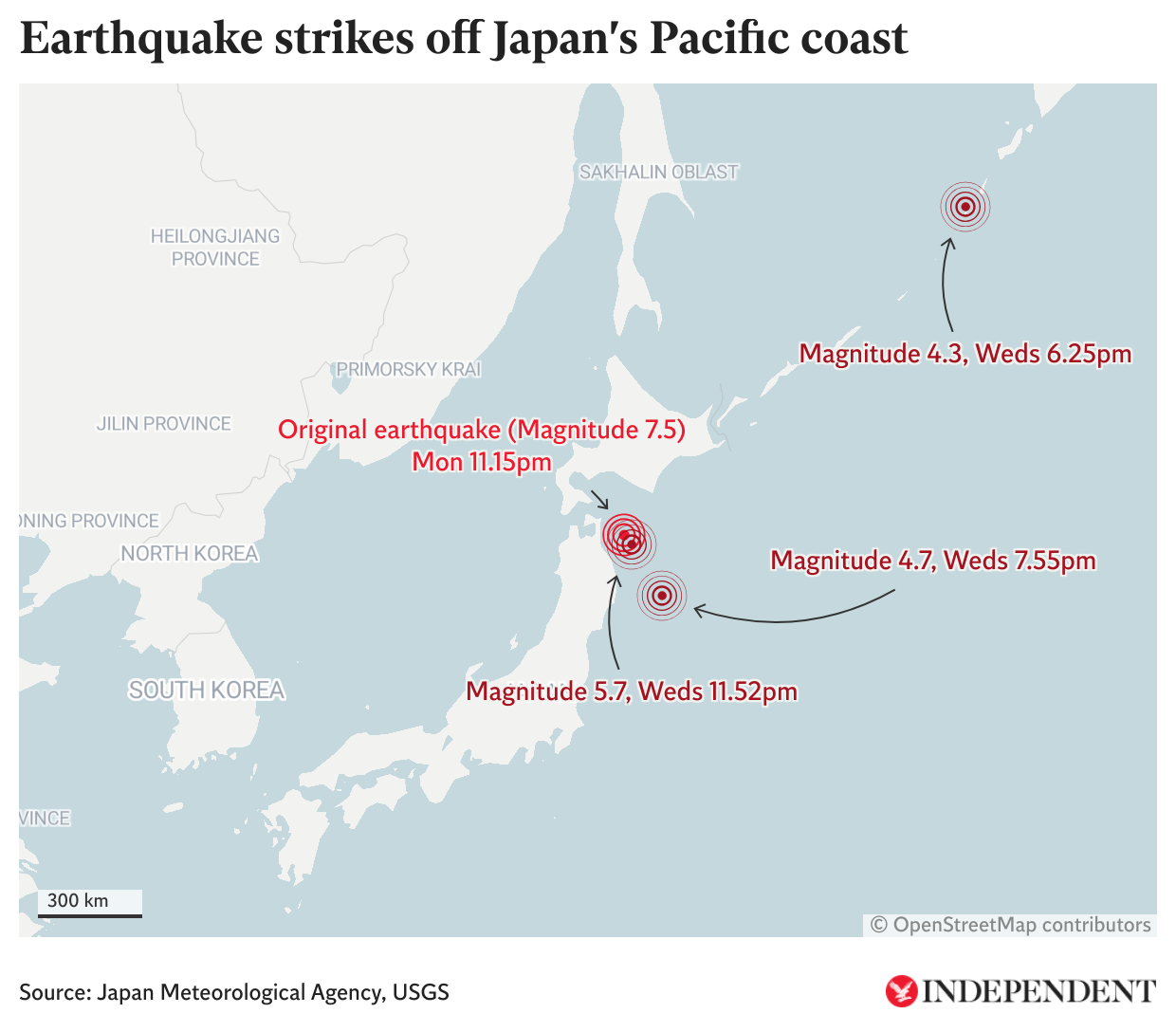
The 7.5 magnitude earthquake was recorded in the Pacific Ocean, 50 miles off the coast of Aomori, on Monday, December 8, at around 11:15 pm local time. Aomori is located at the northern tip of Honshu, Japan’s main island, known for heavy snowfall during the winter months.
East Japan Railway suspended some services following the quake, while two Shinkansen Expressway trains made emergency stops. Traffic jams and car accidents also occurred after panicked people tried to flee the city of Hanchinohe in Aomori.
Since the initial earthquake, a series of aftershocks have occurred daily, including near the coast of Honshu and in the Hokkaido region. According to the European Mediterranean Seismological Centre, these aftershocks have had smaller magnitudes than the original tremor.
Japanese authorities have stated that there has been no significant damage to major infrastructure, and nuclear power plant facilities remain unscathed after the earthquake.
Areas Still Under Alert
"There is a possibility that further powerful and stronger earthquakes could occur over the next several days," said a JMA official at a briefing shortly after the quake. When a 7-magnitude earthquake or higher occurs in Japan or the Chishima Trench, the likelihood of another earthquake increases, according to the JMA.
In such cases, the JMA issues a “megaquake” advisory as a precaution, officially called the “Off the Coast of Hokkaido and Sanriku Subsequent Earthquake Advisory.” Although the probability of a megaquake is only around one percent, this advisory serves as a warning to residents.
These alerts were introduced after Japan's deadliest earthquake in 2011, which led to a tsunami and subsequent natural disaster at the Fukushima nuclear power plant. The current alert covers coastal areas from Hokkaido down to Chiba Prefecture.
Authorities have urged residents to review evacuation routes, secure furniture, and prepare emergency supplies, including food, water, and portable toilets. The JMA also warned that areas already affected by tremors should be aware of the increased risk of house collapses and landslides.
Residents in regions where shaking was strong are advised to stay prepared for at least a week after the earthquake. Despite the ongoing megaquake advisory, there is currently no need for citizens to evacuate.
UK Government Advice
The UK’s Foreign, Commonwealth & Development Office (FCDO) has released an earthquake and tsunami advisory. The statement said, "All tsunami advisories have been lifted following a 7.5 magnitude earthquake off Aomori prefecture on 8 December." However, the JMA has warned of the possibility of another follow-up large-scale earthquake over the next seven days.
The FCDO advises travelers to "follow the advice of local authorities" and suggests checking the NHK website for more information. NHK is a Japanese public media organization.
Flight Status and Travel Plans
The earthquake caused 200 passengers to be stranded overnight at New Chitose Airport, one of Japan’s largest airports in Hokkaido, due to flight cancellations, delays, and safety inspections. Some flights continued to be delayed or cancelled on Tuesday, but operations appear to be largely back to normal, according to FlightRadar.
Regarding holiday plans, the FCDO has not issued any warnings against non-essential travel to Japan. Therefore, there are no special circumstances in place that would allow for a full refund of trips. The ability to cancel a trip will depend on the holiday provider, so it is advisable to contact them directly if considering a postponement.
Currently, there is no obligation for companies to refund bookings if a traveler wishes to cancel. Additionally, travelers will not be able to claim on their travel insurance due to safety concerns unless government advice changes.
If you have travel insurance, some policies include natural disaster cover for events that prevent you from reaching your destination. It is recommended to check your insurance policy and consult with your insurer to understand your options.
Conclusion
While the situation remains under close monitoring, the focus is on staying informed, preparing for potential risks, and following local guidelines. As the JMA continues to issue alerts, travelers and residents alike must remain vigilant and take necessary precautions.

Post a Comment for "Is Japan Safe to Visit After Recent Earthquakes?"
Post a Comment