Livers of Rivers Return to Southwestern Pennsylvania's Waters
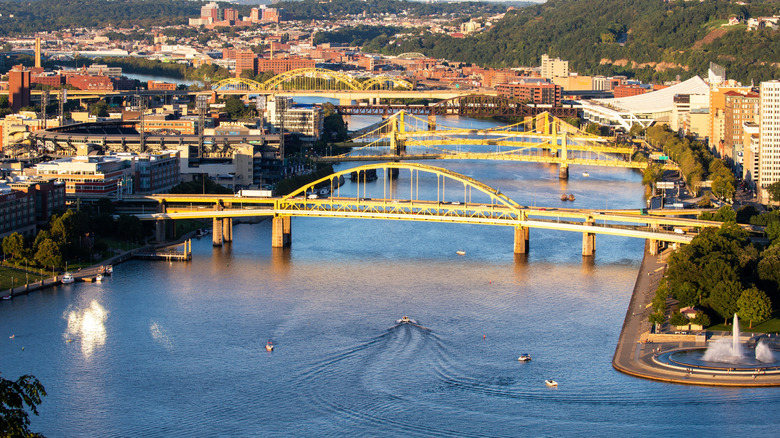
The Transformation of Southwestern Pennsylvania
Through the 19th and early 20th centuries, Southwestern Pennsylvania was a hub of industrial activity. The region's largest city, Pittsburgh, gained international recognition as the "Steel City" due to the efforts of industrialist Andrew Carnegie. He leveraged the area’s rich coal and iron ore resources to establish the Carnegie Steel Company, which significantly boosted the local economy. However, this industrial boom came at a cost—waterways in the region became heavily polluted with industrial waste and runoff.
The transformation of Pittsburgh began in the 1980s when the steel industry declined. This shift marked the start of a new era for the city, where former steel mills have been repurposed into creative hubs that attract tourists and residents alike. Today, Pittsburgh is celebrated as one of America’s most livable cities, showcasing a remarkable rebirth from its industrial past.
Environmental Renaissance in Southwestern Pennsylvania
The environmental landscape of Southwestern Pennsylvania has also undergone a significant renaissance. Although remnants of industrial contamination, such as manganese and cadmium, can still be found in the water, their levels have decreased enough to allow local wildlife to return. One of the most important indicators of this recovery is the presence of freshwater mussels, often referred to as the "livers of the rivers."
Freshwater mussels play a crucial role in maintaining healthy aquatic ecosystems. Like the human liver, these mussels act as natural filters, removing harmful algae, microorganisms, and chemicals from the water. An adult mussel can filter up to 15 gallons of water daily, contributing to the overall health of the river and supporting other lifeforms that depend on it. Their presence is seen as a positive sign of improved water quality and ecological balance.
River Livers in Southwestern Pennsylvania
Pittsburgh is located at the confluence of the Allegheny and Monongahela Rivers, which merge to form the Ohio River. All three rivers have faced the impacts of industrialization and human activity, but they have become focal points for restoration efforts in recent decades. Historically, the Ohio River was home to the highest diversity of freshwater mussels in Pennsylvania, hosting 53 of the state’s 67 species. While this number hasn’t fully returned, the Ohio River currently supports 22 living mussel species.
Recent surveys in areas like the Emsworth Pool, between the McKees Rocks Bridge and Brunot Island, have revealed a record 10 mussel species, marking the highest count in that location since 1904. These findings highlight the progress being made in restoring the region’s aquatic ecosystems.
Challenges and Conservation Efforts
Despite these positive developments, challenges remain. Twelve of Pennsylvania’s mussel species are classified as endangered. This includes the Pistolgrip, Rabbitsfoot, and Clubshell mussels in the Allegheny River, as well as the salamander mussel, whose population in the Ohio River is among the smallest in its entire range. Alarmingly, 80% of these mussel populations are currently at high risk of extinction.
However, the resurgence of mussels offers hope for the future. For those who enjoy outdoor activities like fishing at spots such as Cascade Park, a nature escape turned amusement park, the return of these mussels is a promising sign that these recreational opportunities will continue to thrive.
A Brighter Future for the Region
The story of Southwestern Pennsylvania reflects a broader narrative of resilience and renewal. From its industrial roots to its current status as a vibrant, livable city, the region has shown an ability to adapt and evolve. The return of freshwater mussels is just one example of how nature is slowly reclaiming its place in this once-polluted landscape. As conservation efforts continue, the future looks increasingly promising for both the environment and the communities that call this region home.

Post a Comment for "Livers of Rivers Return to Southwestern Pennsylvania's Waters"
Post a Comment