This Slumbering Volcano Awakens After 10,000 Years
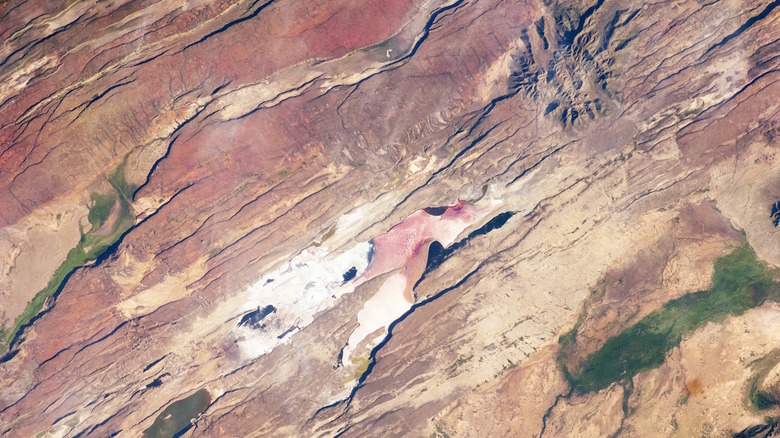
On Sunday, November 23, 2025, Hayli Gubbi, a volcano located in Ethiopia's Afar Region, erupted for the first time in recorded history. Scientists believe that the last eruption of this volcano occurred between 10,000 and 12,000 years ago, although records from this remote area are practically nonexistent. The event serves as a reminder that even dormant volcanoes can erupt unexpectedly.
Hayli Gubbi is situated at the southern end of the Erta Ale Range, which is part of the East African Rift System—a region where the African continent is slowly splitting apart. The eruption sent an ash plume soaring to approximately 45,000 feet (13,700 meters) into the atmosphere, reaching altitudes typically used by commercial airplanes, which usually fly between 33,000 and 40,000 feet.
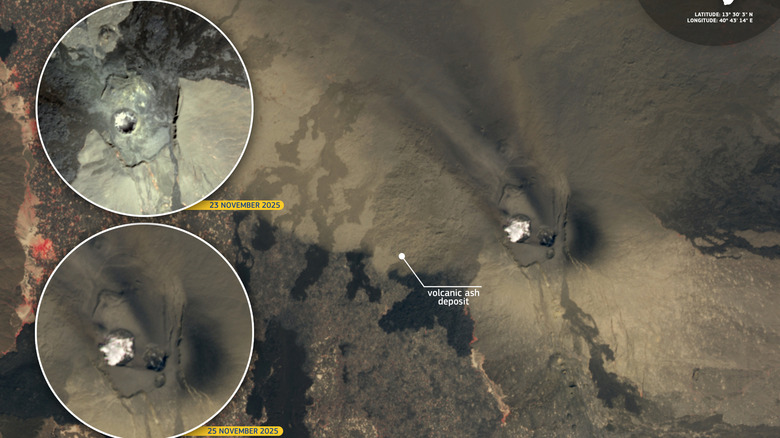
The explosion began around 11:30 a.m. local time and had largely subsided by 11 p.m. on the same day. The force of the eruption created a second crater about 650 feet (200 meters) wide, along with a smaller third crater. Residents of Semera, a city located about 120 miles (190 kilometers) south of the volcano, heard the explosion and felt the shock wave. Satellite data indicated that the plume contained roughly 220,000 tons of sulfur dioxide mixed with ash and rock fragments.
Ash Reaches India in Record Time
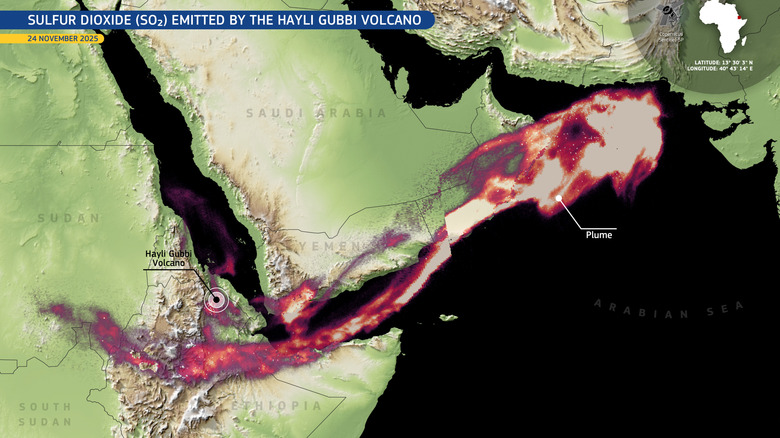
The ash plume traveled across the Red Sea and the Arabian Peninsula, passing through Yemen and Oman before reaching southern Pakistan and northern India. Reports suggest that the plume reached Delhi by 11 p.m. on November 24, covering a distance of approximately 2,566 miles (4,130 kilometers) from its origin. This distance is comparable to the distance between New York and Los Angeles, and it was covered in just 35 hours.
Volcanic ash poses a significant threat to aircraft, as the fine particles can clog jet engine intakes. At high altitudes, the silica in the ash can melt and form a glass-like residue, leading to engine failure. As a result, Air India canceled 11 flights, while Akasa Air suspended its Middle Eastern services. India's Directorate General of Civil Aviation issued advisories to pilots, urging them to report any encounters with volcanic ash.
Hayli Gubbi is classified as a shield-type volcano, known for producing relatively gentle eruptions. However, this particular event was highly explosive, falling under the sub-Plinian category, which is characterized by powerful vertical columns of ash and widespread dispersal. The eruption highlights the unpredictable nature of volcanoes in the East African Rift System.
Villages Buried Under Ashfall
Although the eruption was sudden, it wasn't entirely unexpected, thanks to early warning signs of volcanic activity. Nearby, the Erta Ale volcano experienced explosive activity on July 15, accompanied by a magma intrusion that moved southeast along a dike toward Hayli Gubbi. Fissure vents appeared along the rift, with the closest group just 1.2 miles (2 kilometers) from the volcano's crater. Earlier in the year, satellite observations noted ground uplift. Between July 25 and November 18, a strange white cloud was observed within the crater, indicating magma movement beneath the surface, which ultimately led to the eruption.
The most affected areas were the villages that experienced heavy ashfall. Afdera, a village located 17 miles (28 kilometers) west of the volcano, was completely buried under volcanic ash. Residents reported symptoms such as difficulty breathing and severe coughing, prompting emergency medical teams to be deployed to the region.
In addition to the ash, the eruption released around 220,000 tons of sulfur dioxide into the atmosphere, which can significantly impact air quality. This event underscores the unpredictability of even long-dormant volcanoes, as Hayli Gubbi remained silent for over 10,000 years before suddenly erupting.

Post a Comment for "This Slumbering Volcano Awakens After 10,000 Years"
Post a Comment