Citizen Scientists Aid in Discovery of 139-Year-Old Lake Michigan Shipwreck
A Historic Discovery in Lake Michigan
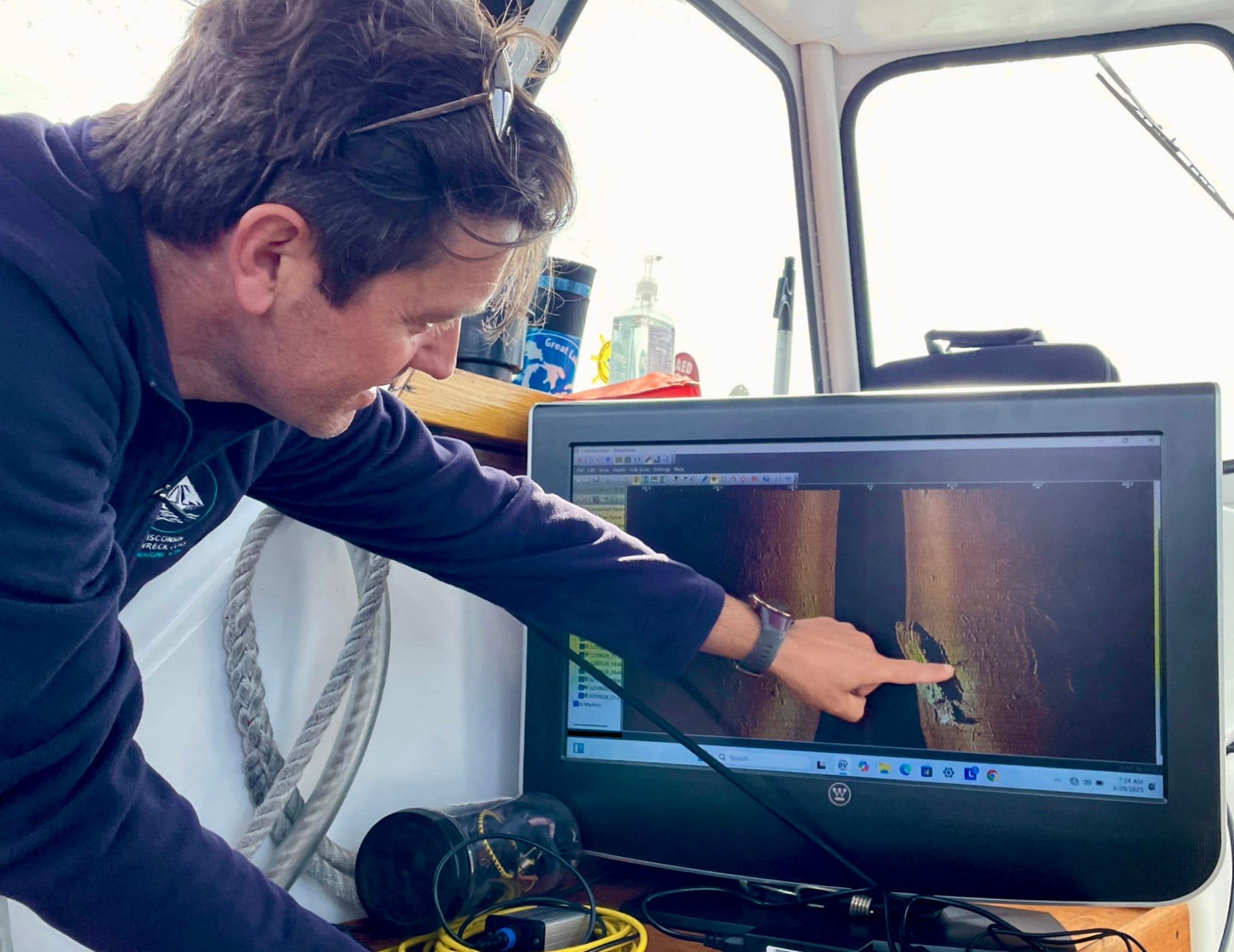
In a remarkable moment for Wisconsin maritime history, a wooden schooner known as the F.J. King has been discovered beneath the waters of Lake Michigan after more than 140 years. This discovery marks a significant milestone in the ongoing efforts of historians and shipwreck hunters to uncover the secrets of the Great Lakes. The F.J. King, a 144-foot, three-masted vessel, had eluded searchers for decades until it was finally located off the coast of Baileys Harbor.
The discovery was made possible by the collaborative efforts of professional archaeologists and citizen scientists. Brendon Baillod, president of the Wisconsin Underwater Archeological Association, described the moment as one of astonishment when the ship appeared on sonar. “It was hidden in plain sight, right where it was supposed to be,” he said. This event not only highlights the dedication of those involved but also underscores the importance of community participation in historical exploration.
The Journey of the F.J. King
The F.J. King was built in Toledo, Ohio, in 1867 and was originally owned by William Griffin and J.S. Dunham. It required approximately 20 acres of white oak forest to construct, showcasing the craftsmanship of the era. The ship's fate took a tragic turn on September 15, 1886, when it was carrying 600 tons of iron ore from Escanaba, Michigan, to Chicago. During a fierce storm, the ship encountered 10-foot waves that caused its wooden seams to open, allowing water to flood in faster than the crew could pump it out.
As the situation worsened, the captain ordered the crew into the yawl boat. Around 2 a.m. on September 16, the ship's stern rose dramatically, causing the iron ore to crash forward and blow the deckhouse off. The crew witnessed the captain’s papers being hurled 50 feet into the air before the F.J. King disappeared into a 137-foot-deep grave. A passing schooner, La Petite, rescued all eight crew members and brought them to Baileys Harbor.
A Community Effort
This discovery was not just a triumph for professionals but also an opportunity for community members to engage in the process. Kevin McConnaughay, one of the participants in the expedition, shared his experience, stating, "I have a new hobby now." For many, this event opened their eyes to the meticulous work involved in locating shipwrecks, including extensive research and historical data analysis.
The F.J. King is particularly notable for its intact condition, sitting upright on the lakebed with the top reaching around 20 feet above the seabed. This is rare, as most ships carrying heavy loads tend to break apart upon impact. The wreck is the last to have a standing $1,000 reward from Neptune's Dive Club of Green Bay, which will be used for future citizen science projects.
Preserving History
Once a wreck is found and reported to the state historical society, a thorough survey is conducted, including photography and the creation of a 3D model. After the site is properly documented, coordinates are released so others can explore it. The Wisconsin Underwater Archeology Association plans to continue community-involved searches for historic underwater remains.
Finding a wreck is not just about uncovering artifacts; it's about telling the story of these vessels and connecting people with the rich maritime history of the Great Lakes. As Baillod explained, “It’s the last tangible way we can do that.” Shipwrecks serve as time capsules, preserving pieces of history that have been written about and forgotten.
Looking Ahead
The F.J. King's discovery is a reminder of the importance of preserving and understanding our maritime heritage. With the support of community members and the continued efforts of organizations like the Wisconsin Underwater Archeological Association, the stories of these vessels can come back to life. As Kevin Cullen, a member of the association, noted, “We found a piece of history that has been written about and forgotten. And now it can come back to life.”
The journey of the F.J. King is just one example of how the past continues to shape our present. Through the combined efforts of professionals and citizens, the legacy of the Great Lakes' maritime history can be preserved for future generations.

Post a Comment for "Citizen Scientists Aid in Discovery of 139-Year-Old Lake Michigan Shipwreck"
Post a Comment