Kazakhstan's Katon Karagay Faces a Choice: Tourism or Tradition
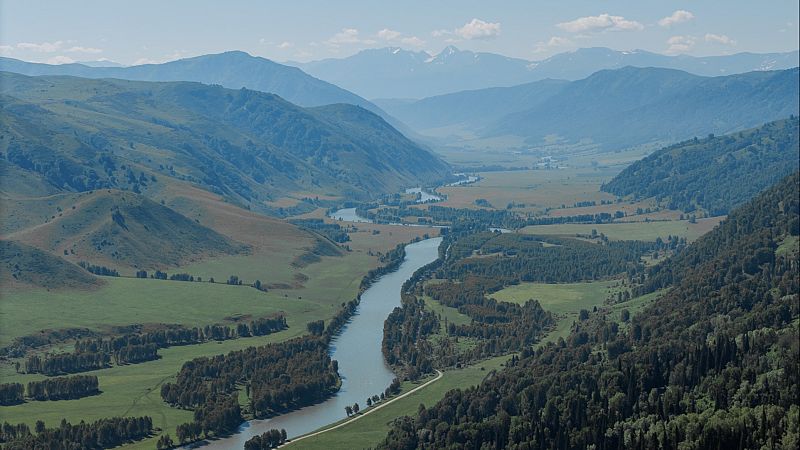
A Hidden Paradise in the Altay Mountains
Katon Karagay, nestled within the Altay mountain range, is a breathtaking region that stretches across Kazakhstan, Russia, China, and Mongolia. Unlike much of Kazakhstan, which experiences extreme temperatures, this area remains lush with forests on its lower slopes and glaciers on its higher peaks. The melting glaciers feed a network of pristine creeks and rivers, creating natural wonders such as waterfalls and crystal-clear lakes. This untouched beauty is often compared to the Swiss Alps or the American Rocky Mountains.
Despite its natural splendor, Katon Karagay faces a significant challenge: depopulation. Once home to nearly 40,000 people, the population has dwindled to around 17,000. Many villages are now inhabited only by the elderly, with more deaths than births each year. People leave for better opportunities in larger cities, driven by a lack of education, healthcare, and transportation infrastructure.
To combat this trend, local initiatives have emerged. A successful businessman from Katon established a fund aimed at improving education and reversing the decline. The Fund for Sustainable Development of Rural Areas partnered with the Nazarbayev Intellectual School to enhance local education. Over time, the schools in Katon have shown remarkable progress, with student participation in national contests increasing from three in 2019 to 200 in 2024.
However, the issue extends beyond education. Financial stability is another major concern. The economy of Katon relies heavily on non-timber forest products, deer herding, honey production, and tourism. Local leaders recognize the potential of tourism but emphasize the need for sustainable development to preserve the region’s natural and cultural heritage.
Balancing Growth and Preservation
The government of East Kazakhstan is actively working to develop tourism while ensuring environmental protection. Governor Nurymbet Saktaganov highlights the importance of eco-tourism, ethno-cultural tourism, and therapeutic tourism. He also emphasizes the role of agriculture, including beekeeping and the cultivation of wild herbs, in supporting local entrepreneurship.
Infrastructure improvements are underway, including the construction of a new road and an airport that will significantly reduce travel time from Ust Kamenogorsk. These developments are expected to attract more visitors, but they also raise concerns about the impact of mass tourism on the region’s delicate ecosystem.
Locals are eager for tourists but fear the consequences of overcrowding. There is a growing debate about how to manage tourism effectively. Some advocate for strict limits, while others believe in gradual growth. Fatima Gerfanova, director of the Fund for Sustainable Development of Rural Areas, stresses the importance of sustainable tourism that protects both nature and the local way of life.
Embracing Sustainable Tourism
Many residents have already started adapting to the changing landscape. Traditional homes are being converted into guesthouses, and some have even erected yurts to accommodate visitors. Local businesses are offering homemade food, honey, and other products, while traditional healing practices are gaining popularity.
Damir Kalikan, a local healer, has turned his household into a medical center specializing in deer antler therapy. His unique approach combines traditional methods with modern wellness practices, attracting visitors from abroad. While he welcomes tourists, he also believes in limiting numbers to maintain the region’s tranquility.
Anatoly Slavitchev, founder of the 'Kat’n’Go' project, shares similar concerns. His tours focus on helping urban dwellers disconnect from their fast-paced lives and reconnect with nature. He argues that mass tourism could harm the very essence of what makes Katon special.
A Vision for the Future
Governor Saktaganov assures locals that sustainable tourism is the priority. Plans include controlling visitor numbers through permits and involving the community in environmental protection efforts. He emphasizes the need to preserve the uniqueness of Katon Karagay for future generations.
As the conversation continues, the tension between development and preservation remains evident. The arrival of Chinese bulldozers to build a new road near Rakhmanovskoe Lake highlights the challenges ahead. While infrastructure improvements are necessary, they must be balanced with the need to protect this natural paradise.
Ultimately, the success of Katon Karagay depends on finding a sustainable path that respects both the environment and the local culture. With careful planning and community involvement, it may be possible to preserve this hidden gem for years to come.

Post a Comment for "Kazakhstan's Katon Karagay Faces a Choice: Tourism or Tradition"
Post a Comment